




If you want better results from roofing door knocking, timing matters as much as your script. The goal isn’t “more doors”—it’s more conversations with decision-makers at a time when they’re not rushing out the door, cooking dinner, or putting kids to bed.
Below is a practical 2026 schedule for weekday vs weekend door knocking, plus timing “rules” that keep you productive (and help you avoid unnecessary complaints).
The short answer: the best windows to knock
Across door-to-door sales data and canvassing best-practice guidance, the most consistently recommended windows are:
- Weekdays: late afternoon into early evening (roughly 3–8 PM)
- Weekends: Saturday late morning to mid-afternoon (often strongest)
Why: more homeowners are home after work/school on weekdays, and many are home and available on weekends.
Weekday vs weekend: which is better for roofing?
Weekdays usually win for “serious” conversations (decision-makers + scheduling)
The 4–7 PM window tends to produce more homeowners at home and willing to talk, especially when you’re offering a calm, no-pressure inspection and documentation approach.
Weekends often win for volume (more people home overall)
Saturday can be excellent, especially mid-day, but you may see more “busy household” energy—projects, errands, family time. The key is to keep your approach short and permission-based.
The best door knocking schedule for roofing (2026)
Best weekday blocks
Block A: 10:00 AM – 12:00 PM
- Good for retirees, remote workers, second-shift households
- Less competition from other canvassers
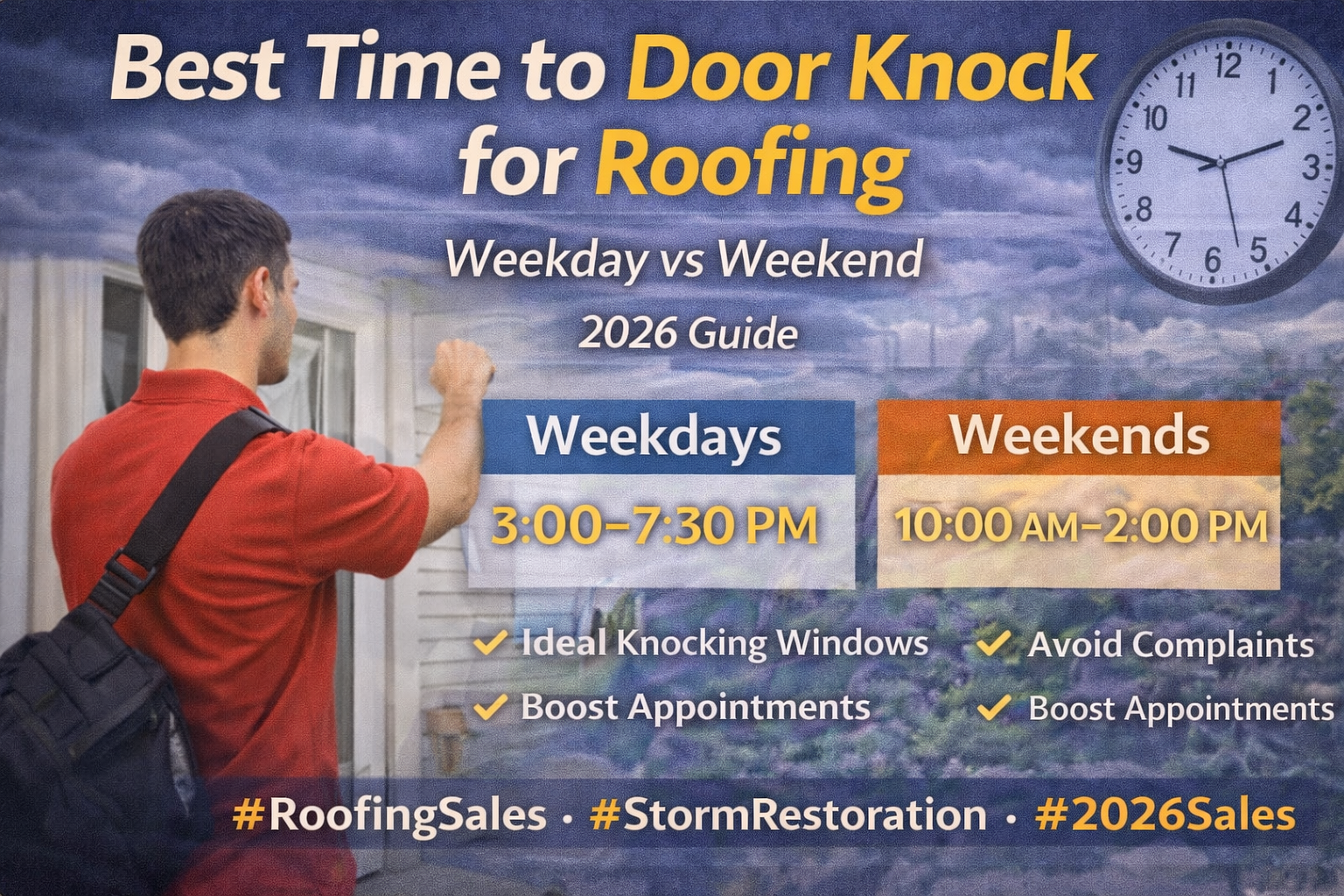
Block B: 3:00 PM – 7:30 PM (prime window)
- Highest probability of catching decision-makers after work/school
Avoid: 12:00 PM – 2:30 PM in many neighborhoods (school pickup, errands, mid-day rush).
Best weekend blocks
Saturday: 10:00 AM – 2:00 PM (prime window)
Sunday: 12:00 PM – 4:00 PM (use carefully)
- Some homeowners prefer no interruptions Sundays; keep it respectful and shorter.
Avoid: early morning and during dinner hours.
The “don’t knock” rules that protect your brand
These aren’t just etiquette—they reduce complaints and keep your team safer:
- Don’t knock after dark unless you have a very strong reason (and even then, be cautious). Many D2D reps mention people get more defensive after sunset.
- Respect “No Soliciting” signs and HOA rules.
- Avoid dinner time pressure: if you knock 5–7 PM, keep it ultra short and give an easy out.
- Weather + local events matter (snow, extreme cold, big games, block events can crush contact rate).
Roofing-specific timing tips that increase contact rate
Knock around your own inspections
A simple field tactic: hit 6–10 neighbors around every appointment you run. It’s efficient and makes your presence “make sense” in the neighborhood.
Use “micro-timing” after storms
After hail/high wind:
- First 3–10 days: higher curiosity and urgency
- 2–6 weeks: still strong, but homeowners are more guarded (you need trust + documentation language)
Adjust for seasons (especially Chicagoland winters)
In winter, daylight ends early and sidewalks can be icy—shift earlier:
- Weekdays: 2:00–6:00 PM
- Weekends: 10:30 AM–1:30 PM
A simple weekly plan that works
If you’re building a pipeline, run a repeatable rhythm:
Mon–Fri:
- 10:00–12:00: light knocking + follow-ups
- 3:00–7:30: prime knocking + set inspections
Saturday:
- 10:00–2:00: best volume window
- 2:00–3:00: confirmations for next week
Sunday:
- Optional (only if your market tolerates it): 12:00–4:00, short approach only
The metric that matters more than time: “show rate”
You can knock at the perfect hour and still lose money if your appointments don’t sit. Your schedule should include time for:
- confirmation texts
- reminder calls
- same-day follow-up
That’s how “good times” turn into real commissions.
Want a timing plan tailored to your territory?
Allied Emergency Services, Inc.
📞 800-792-0212
📧 info@alliedemergencyservices.com