

If you’re looking for entry-level roofing sales jobs with no experience, you’re in a good spot—roofing is one of the few sales careers where a motivated beginner can ramp fast and earn serious money. The catch is that most people wash out because they don’t understand what the job actually is, how commissions work, or how to build skills quickly.
Here’s how to start the right way in 2026.
What “entry-level roofing sales” really means
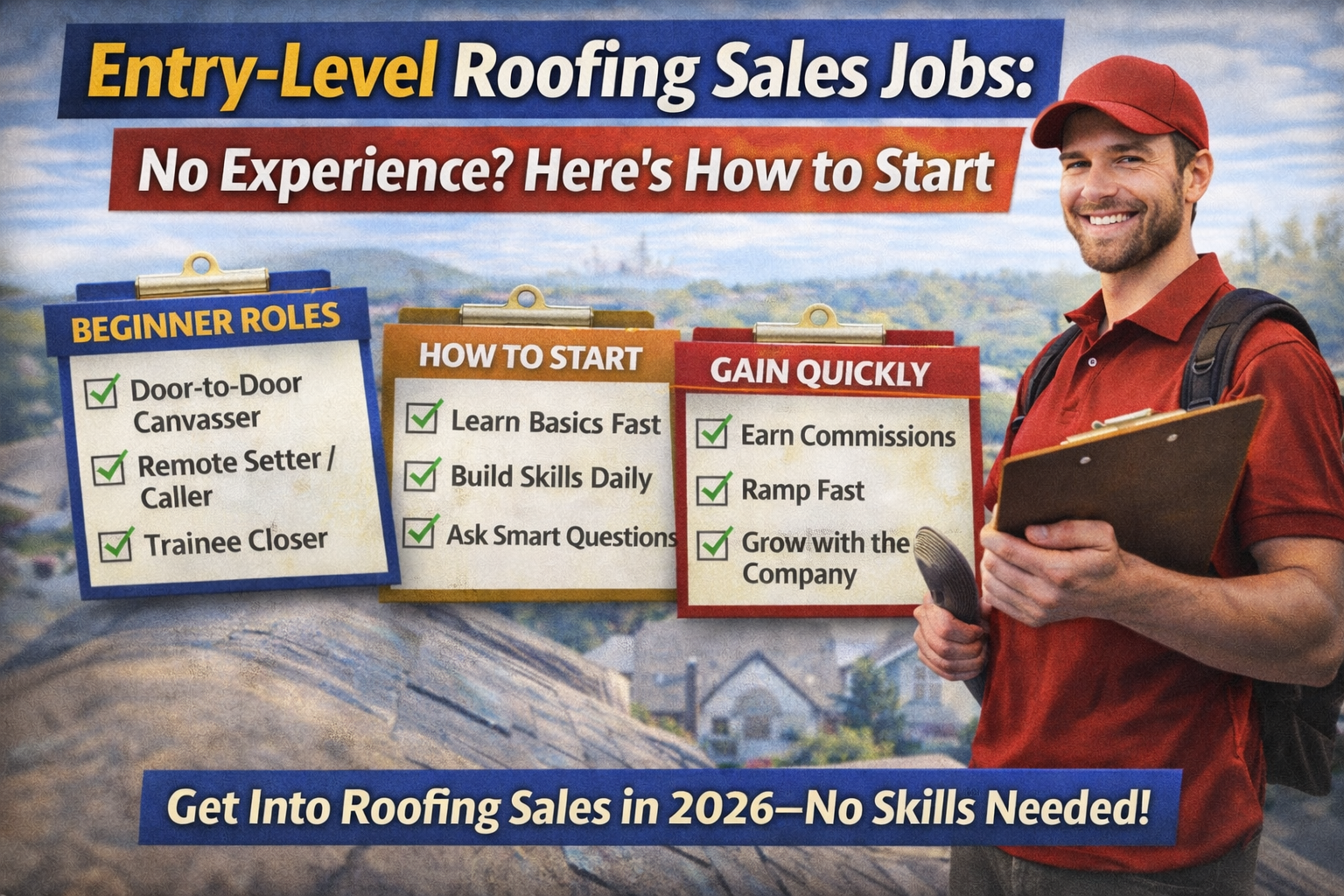
Most entry-level roles fall into one of these tracks:
1) Canvasser (door-to-door lead gen)
You set inspections for a closer/inspector. Lower skill barrier, fastest way to learn.
2) Appointment Setter (remote)
You call/text leads and book inspections. Great if you’re organized and consistent.
3) Junior Sales Rep / Trainee Closer
You shadow inspections, learn the pitch, and start closing under supervision.
4) Full-cycle Sales Rep (harder “entry-level”)
You prospect + inspect + sell + follow up. Some companies will train beginners, but it’s a steeper climb.
The skills you need (and what you don’t)
You don’t need:
- construction experience
- a college degree
- a “perfect pitch”
You do need:
- comfort with rejection
- consistency (show up daily, track your numbers)
- communication that feels calm and trustworthy
- coachability (you’ll learn fast if you follow a system)
If you can do those four things, you can get hired and ramp.
Step-by-step: how to start with no experience
Step 1: Pick the right entry role for you
- If you’re outgoing and don’t mind walking: canvassing
- If you’re disciplined and prefer phones: remote setter
- If you want big upside and can handle complexity: trainee closer
Starting as a canvasser or setter is often the fastest path to becoming a closer.
Step 2: Learn the basics in 48 hours (so you don’t sound brand new)
You only need fundamentals:
- common roof types (asphalt shingles, metal, flat systems)
- what hail/wind damage generally looks like
- the basic sales flow: contact → inspection → proposal → close → handoff
You don’t need to “play adjuster” or pretend to be an expert. Your job is to schedule and document.
Step 3: Build a simple “hire me” pitch
When you apply, most companies care more about your attitude than your resume.
Use something like:
- “I’m new, but I’m consistent. I can do the activity every day.”
- “I’m coachable and I track my numbers.”
- “I’m looking for a long-term opportunity where I can earn and grow into leadership.”
That’s what hiring managers want to hear.
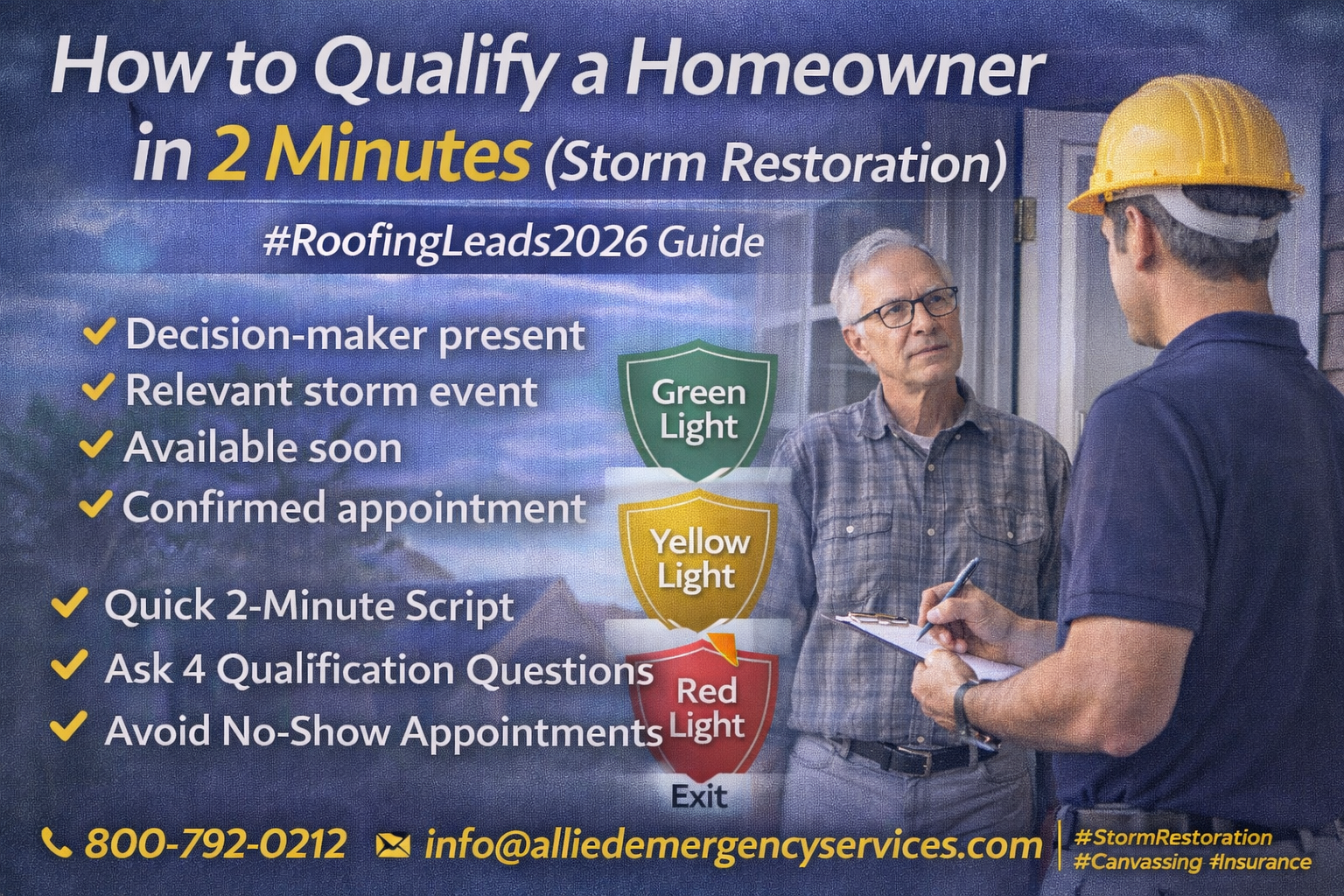
Step 4: Ask the right questions before you accept an offer
This protects you from bad pay plans and chaos:
- W2 or 1099?
- How do leads work? (company-provided vs self-generated)
- What counts as a qualified appointment?
- When are commissions/bonuses paid?
- Do supplements/change orders count toward commission?
- What training is provided in the first 30 days?
- Who handles production issues and customer complaints?
If they can’t answer clearly, move on.
What you’ll do in your first 30 days (realistic expectations)
Week 1: Learn the script + run volume
- knocking or calling
- collecting accurate homeowner info
- booking and confirming inspections
Weeks 2–3: Improve quality
- better neighborhoods/routes/lists
- better qualifying questions
- better follow-up to reduce no-shows
Week 4: Start earning consistently
By the end of month one, most successful beginners:
- have consistent activity
- understand the process
- can set real appointments that actually sit
Common beginner mistakes (and how to avoid them)
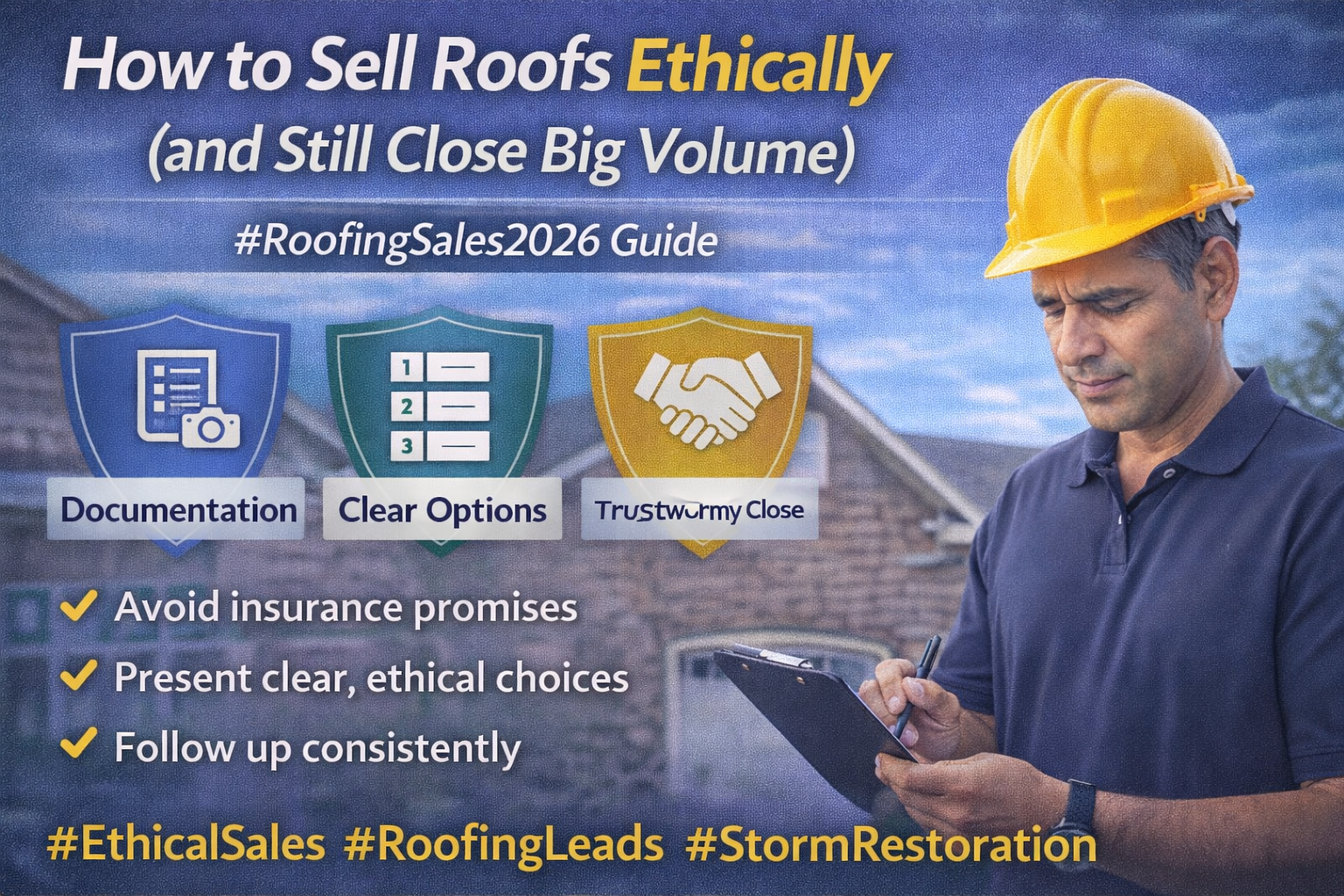
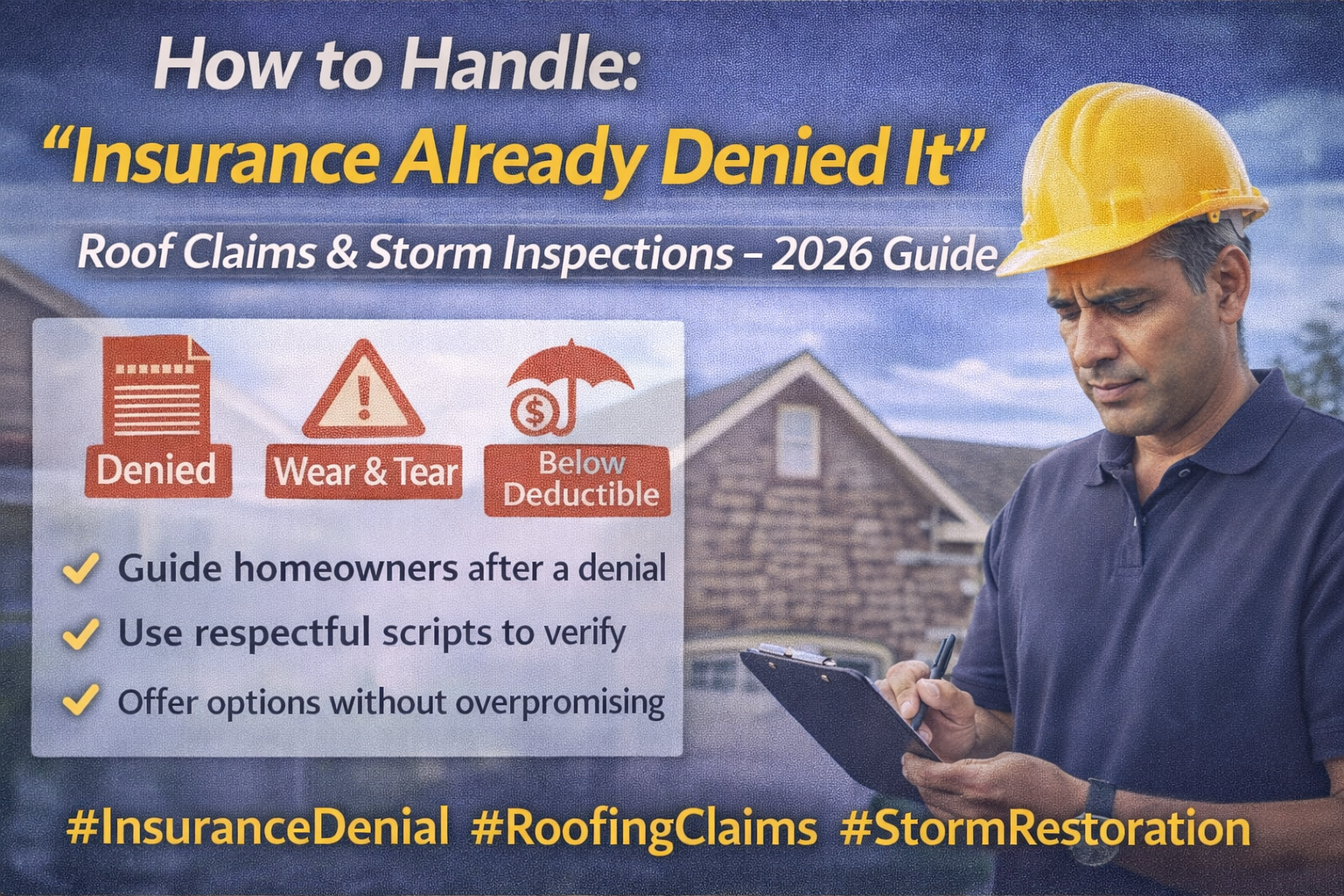
1) Overpromising insurance outcomes
Never guarantee coverage or claim approval. Focus on inspections, documentation, options.
2) Not confirming appointments
No-shows kill your income. Text confirmations and reminders are part of the job.
3) Thinking “talking” is the job
This is a numbers business. Track:
- doors/dials
- contacts
- sets
- sits
- closes (if you’re a closer)
4) Joining a company with no operations
If the company can’t build jobs on time or communicate, your sales will turn into cancellations and chargebacks.
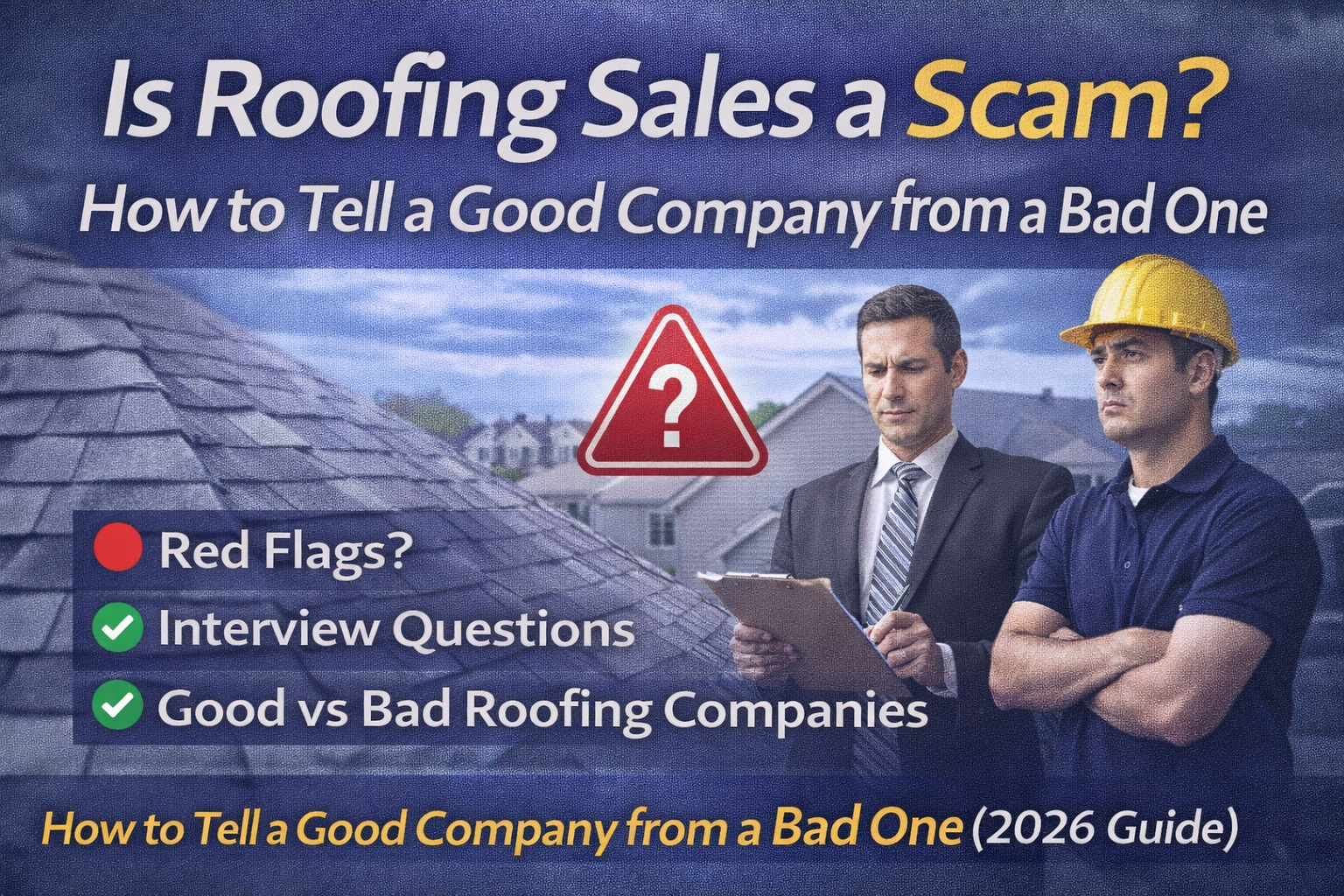
What to look for in a legit entry-level roofing sales company
- clear written pay plan
- training and ride-alongs
- real reviews over time
- strong production capacity
- ethical standards (no “pressure tactics” culture)
- leadership path (trainer, team lead, manager)
FAQ: Entry-level roofing sales jobs
Can you get into roofing sales with no experience?
Yes. Most companies can train the basics quickly if you’re consistent and coachable.
Do I need to climb roofs?
Depends on the role. Many companies start you in canvassing/setting first. If you become an inspector/closer, you’ll likely need comfort with heights (or you’ll rely on drones/ladder assists depending on company).
How fast can you make money?
In canvassing or appointment setting, you can earn quickly if you’re paid per set/sit. As a closer, earnings ramp once you build pipeline and jobs start paying out.
Is it only door-to-door?
No. There are remote setter roles, retail lead roles, referral-based roles, and commercial paths. Door-to-door is just the fastest entry point for many people.
Want to start in Chicagoland?
If you’re looking for an entry-level opportunity in roofing/storm restoration and you’re ready to work, reach out:
Allied Emergency Services, Inc.
📞 800-792-0212
📧 info@alliedemergencyservices.com
Apply: https://www.careers.alliedemergencyservices.com/jobs