



Oklahoma Supreme Court Case PR-123739: State Farm Seeks a Writ to Block AG Intervention—What’s Happening and Why It Matters
If you work in storm restoration, represent policyholders, or simply own a home in hail country, Oklahoma’s homeowners-insurance litigation is worth watching closely—because it may shape how aggressively state officials can step into claim-handling disputes and how much daylight the public gets into industry practices.
One case now sits at the center of that fight:
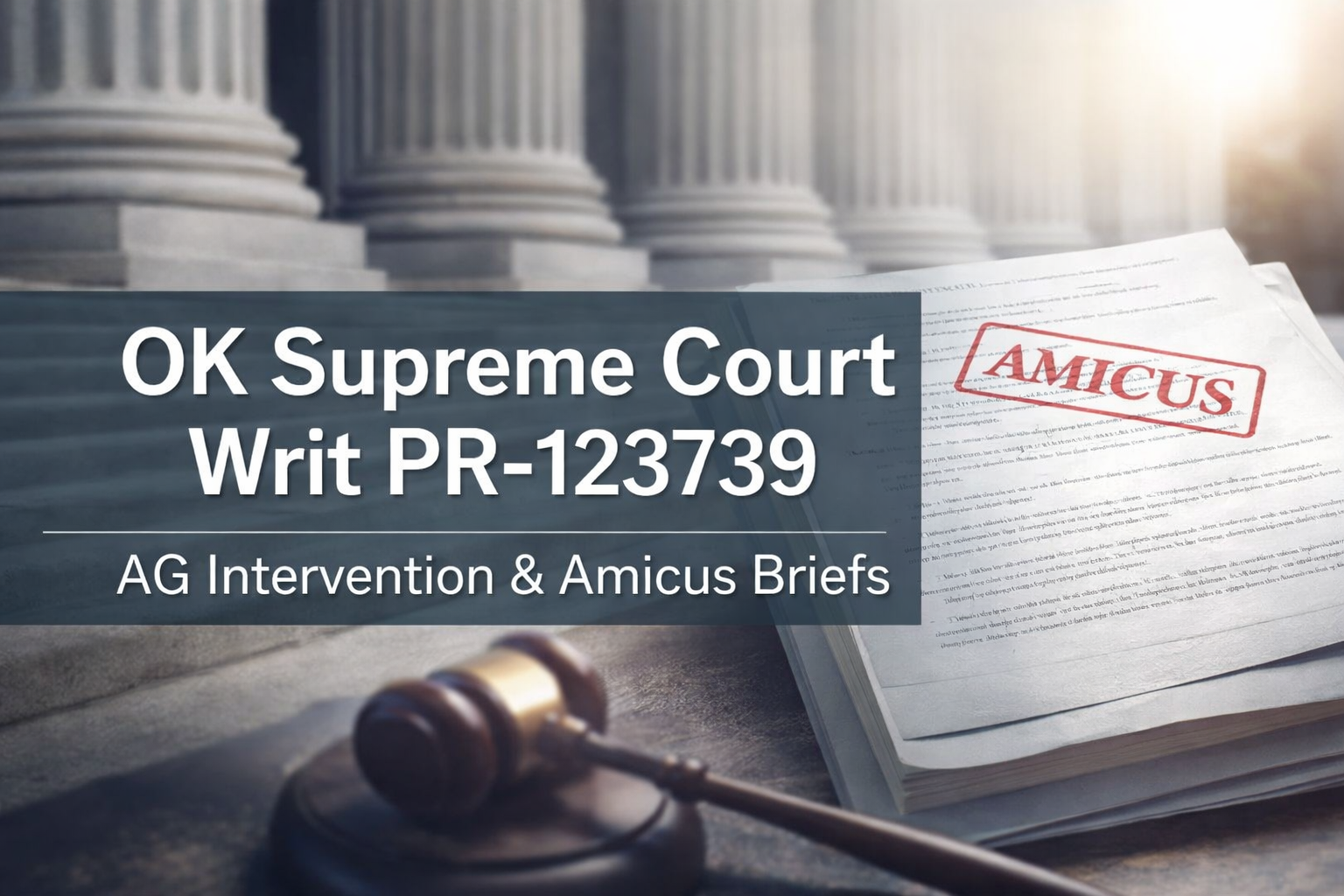
Oklahoma Supreme Court case PR-123739 ([Writ of] Prohibition)—captioned State Farm Fire & Casualty Company (Petitioner) vs. The Honorable Amy Palumbo (Respondent), with Billy Hursh and Lacy Hursh and Oklahoma Attorney General Gentner Drummond (in his official capacity) listed as real parties in interest.
The short version: What State Farm is asking the Oklahoma Supreme Court to do
According to the Oklahoma State Courts Network (OSCN) docket, State Farm filed the writ proceeding on 01/16/2026 in the Oklahoma Supreme Court, arising out of Oklahoma County District Court case CJ-2025-2626.
A writ of prohibition (in plain English) is typically an emergency-style request asking a higher court to stop a lower court from taking (or enforcing) a particular action that the petitioner argues is beyond the lower court’s lawful authority.
In this dispute, the lower-court flashpoint is Judge Amy Palumbo’s order granting the Oklahoma Attorney General’s intervention—an intervention the petitioner (State Farm) is trying to unwind via the writ proceeding.
Key timeline from the OSCN docket (PR-123739)
Here are the highlights you can verify directly on the case page:
- 01/16/2026 – Writ proceeding filed (“[Writ of] Prohibition Initial Filing”), including “Application to Assume Original Jurisdiction and Petition for Writ of Prohibition” and a “Brief in Support.”
- 01/20/2026 – OSCN reflects an oral presentation set for 02/12/2026 (then later impacted by an order).
- 01/23/2026 – OSCN reflects an entry stating the oral presentation is stricken pending further order of the Court.
- 01/23/2026 – An application by trade associations/business advocacy organizations to file a single, joint amicus submission is docketed.
That last point matters more than most people realize.
The amicus move: NAMIC, APCIA, and the U.S. Chamber of Commerce step in
On January 23, 2026, trade associations—NAMIC, APCIA, and the U.S. Chamber of Commerce—sought leave to file a single, joint amicus brief supporting State Farm’s position (as reflected by the filing title on the OSCN docket).
In plain terms, an amicus curiae (“friend of the court”) brief is how non-parties try to influence the court’s thinking—usually by framing broader policy implications beyond the immediate dispute.
From what’s stated in public reporting and the filing description shown in the case materials, the core argument being advanced is that regulation of insurer conduct belongs to Oklahoma’s Insurance Department/Commissioner—not the Attorney General—under the Oklahoma Constitution.
Background: Why this case is getting national attention
The underlying Hursh litigation has been covered as a dispute over hail/wind claim handling and alleged systemic underpayment/denials. For example:
- Oklahoma Watch reporting (republished by Free Press OKC) describes the Hursh story and broader allegations around hail claim denials and litigation activity.
- The Oklahoma Attorney General’s office publicly characterized the dispute as involving allegations of a coordinated program to limit roof-related payouts by denying or reducing valid hail and wind claims.
- Regional reporting has tied the litigation environment to consumer and market impacts (premiums, claim disputes, and public interest arguments).
Important note: these are allegations and contested narratives. The Oklahoma Supreme Court writ proceeding is, at its core, a fight over authority and procedure (who can intervene, who can regulate, and what powers each constitutional office has).
Why contractors, policyholders, and attorneys should care
1) It’s a “who regulates insurers?” test—AG vs. Insurance Commissioner
If the court narrows (or expands) the Attorney General’s ability to intervene, that can change how quickly and aggressively state-level enforcement pressure can be applied when claim-handling conduct is alleged.
2) It may affect discovery pressure and public visibility
In storm claim disputes, the practical leverage often comes down to documents, training materials, vendor relationships, and internal guidance. High-profile interventions can increase the stakes and the scrutiny.
3) It’s a signal case for other states watching hail-claim litigation trends
Even though this is Oklahoma-specific, insurers, trade groups, and policyholder firms frequently watch these fights for arguments they can reuse elsewhere.
What to watch next in PR-123739
Based on the OSCN docket posture, watch for:
- Whether the Court re-sets oral presentation or resolves on briefs.
- Any orders addressing the writ merits (grant/deny) and any guidance on intervention authority.
- Additional amicus participation (the joint-brief application invites “other trade organizations or business advocacy organizations” to join that single submission, per the filing title/description shown publicly).
Practical takeaway for policyholders and restoration contractors
If you’re dealing with a disputed storm claim today (any state, any carrier), this case is a reminder to:
- Document damage early and often (photos, measurements, weather data, written reports).
- Build a scope that ties directly to code/manufacturer requirements and clearly separates covered damage vs. prior conditions.
- Keep communications in writing—especially denials, “wear and tear” positions, and partial approvals.
- Escalate strategically: re-inspection requests, appraisal (where available), complaints to the DOI, and counsel review when needed.
(This is general information—not legal advice.)
Need help with storm damage documentation or a second opinion on scope?
If you want a contractor-side documentation approach that holds up under scrutiny (photos, scope logic, code minimum requirements, and clear support for line items), we can help.
Allied Emergency Services, Inc.
Phone: 800-792-0212
Email: info@alliedemergencyservices.com
If you need legal advice for Oklahoma specifically, consider contacting a licensed Oklahoma attorney
FAQ
What is a “writ of prohibition”?
A writ of prohibition is a request asking a higher court to stop a lower court from taking or enforcing an action the petitioner argues is outside the lower court’s lawful authority.
What is PR-123739?
It’s the Oklahoma Supreme Court case number for the writ proceeding captioned State Farm Fire & Casualty Company vs. The Honorable Amy Palumbo, with the Hurshes and the Oklahoma Attorney General listed as real parties in interest.
Who filed an amicus application in support of State Farm?
The OSCN docket reflects an 01/23/2026 filing titled as an application by trade associations/business advocacy organizations to file a single, joint amicus submission.
Disclaimer: This article is provided for general informational purposes only and reflects publicly available filings and reporting. It is not legal advice and does not create an attorney-client relationship. Allied Emergency Services, Inc. is a licensed restoration contractor—not a public adjuster—and does not interpret insurance policies, negotiate claim settlements, or provide services that require a public adjusting license. Coverage determinations and claim decisions are made solely by the insurer and the policyholder subject to the policy terms and applicable law. Property conditions vary and any discussion of damage, repair scope, or code considerations is general in nature; a site inspection by qualified professionals and, when appropriate, advice from a licensed attorney are recommended. If any statement is believed to be inaccurate, please contact us so we can review and correct it.