⚡ Storm or Roof Damage? Get a FREE Estimate
Text ESTIMATE to (844) 907-2546
Or call (800) 792-0212 for 24/7 emergency response
AI-powered • No obligation • Licensed IL & WI
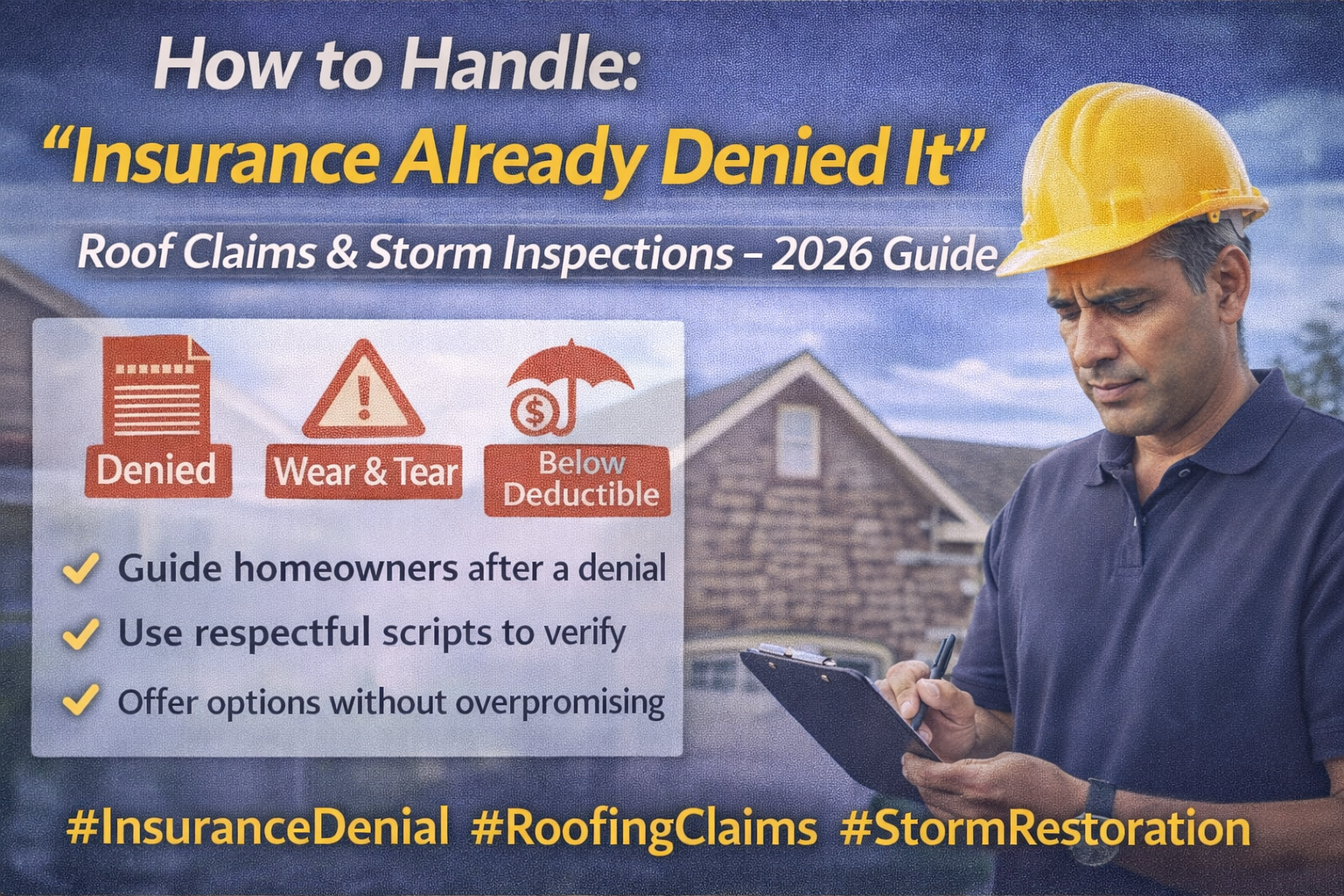
When a homeowner says, “Insurance already denied it,” most contractors either:
- walk away, or
- get pushy and promise a reversal.
Both are mistakes.
A denial doesn’t always mean “no damage.” It often means:
- the inspection was rushed,
- documentation was weak,
- the wrong person inspected (or the wrong areas were documented),
- the carrier categorized it as wear/tear,
- or the claim file simply didn’t include what it needed.
Your job is to respond professionally, protect the homeowner, and offer a clear next step without acting like a public adjuster or guaranteeing outcomes.
This 2026 guide gives you a clean script, questions to ask, and a process to evaluate a denied claim ethically.
First: what NOT to say
Avoid statements that create legal/ethical risk or destroy trust:
- “They have to pay.”
- “I’ll get it approved.”
- “You won’t owe your deductible.”
- “The adjuster is lying” (even if you suspect it—keep it factual).
- “Sign here and we’ll fight them.”
Instead, your tone should be:
“Let’s verify what was documented and what wasn’t, then decide.”
The best calm response (word-for-word)
“Got it. That happens sometimes, especially if documentation wasn’t strong. I’m not here to promise an outcome—my job is to document the roof/exterior condition clearly with photos and measurements so you understand your options. Do you mind if I ask what the denial reason was?”
That sentence:
- acknowledges the situation
- avoids promises
- positions you as documentation-first
- opens a diagnostic conversation
Step 1: Ask these 6 questions (they reveal the real problem fast)
- When was the inspection and denial? (recent vs months ago matters)
- What was the stated reason for denial? (wear/tear, no hail, no wind, not related, exclusions)
- Did they get on the roof? (or was it ground/drone only?)
- Do you have the denial letter and estimate/photos?
- Any interior leaks or new stains since then?
- Has another storm happened since the denial? (possible new date of loss)
You’re not “arguing.” You’re gathering facts.
Step 2: Translate the most common denial reasons
“Wear and tear / deterioration”
This usually means the carrier is saying the condition is age-related, not sudden storm damage.
Your response:
“Understood. The key is whether there’s any sudden wind/hail-related damage documented. We can inspect and document the condition either way, and you’ll have clear photos to compare.”
“No storm-related damage found”
Often means they didn’t see enough “hits” or functional damage.
Response:
“Got it. Sometimes it comes down to what areas were checked and what was documented. We can do a detailed photo inspection so you know what’s actually present.”
“Damage is below deductible”
This may not be a full denial—it’s a “not worth paying” position.
Response:
“That makes sense. Let’s verify the scope and what they included. Sometimes items are omitted, and that changes the math.”
“Late reporting”
They may argue the claim wasn’t reported promptly.
Response:
“Understood. We can still document current condition. If you’ve had additional storms since then, we can also discuss whether there’s a more recent event that may be relevant.”
Step 3: Offer the right next step (without sounding pushy)
Option A: “Second opinion inspection” (best first move)
“If you’d like, we can do a second opinion inspection—photos, measurements, and a simple summary. If it supports the denial, I’ll tell you that too. If there’s documented storm damage or missing scope, you’ll at least have facts.”
Option B: “Document + request reinspection” (only if evidence supports it)
If you find legitimate storm-related indicators or major omissions, then:
“If the documentation supports it, the next step is usually a written request for reinspection with the photo set and scope notes attached.”
Keep it as “usually,” not a guarantee.
Option C: “New loss date” (only if there was another storm)
If a new event occurred after the denial:
“If there’s been another storm since the denial, we can also talk about whether a new date of loss makes more sense. We’d document the current condition and you decide how to proceed.”
Step 4: The homeowner-proof “denial review checklist”
When you review a denied claim, you’re looking for:
- Did the adjuster inspect the roof safely and thoroughly?
- Are key components missing from the scope? (vents, flashing, drip edge, starter, ice & water, valley, steep charges, etc.)
- Was the correct storm date used?
- Was collateral damage documented (soft metals, gutters, window wraps)?
- Were photos taken of the right slopes and elevations?
If you can’t prove it with documentation, don’t oversell it.
Objection answers (word-for-word)
“I don’t want to fight with insurance again.”
“Totally understandable. This doesn’t have to be a fight. The first step is simply documenting the condition so you know what’s real. Then you can decide whether to do anything.”
“We already tried. It’s pointless.”
“I get that. Denials are frustrating. If you’re open to it, we can at least confirm whether the original decision matches what’s actually on the roof—so you’re not guessing.”
“Are you going to handle the claim for me?”
“We can’t act as your adjuster, but we can document the property condition, provide a repair scope if needed, and support a reinspection request with photos—then you decide what steps to take.”
(That line helps avoid the “unlicensed adjusting” trap.)
What a good follow-up message looks like
Text/Email:
“Hi ___, thanks again for speaking with me. If you’d like, we can do a second opinion photo inspection and provide a simple summary of what we find. No pressure and no promises—just clear documentation so you understand your options. If you want to schedule, reply with a day/time that works.”
When you should walk away (and stay ethical)
Sometimes the right answer is: don’t pursue it.
Walk away if:
- the roof is simply end-of-life with no storm indicators
- the homeowner wants you to “make it look like storm damage”
- they demand guarantees or deductible waivers
- you can’t document anything that supports a reinspection
Protect your license, brand, and reputation.
Need help structuring a clean denied-claim workflow?
Allied Emergency Services, Inc.
📞 800-792-0212
📧 info@alliedemergencyservices.com
⚡ Need Storm Damage Help? We Serve 155+ Cities
Allied Emergency Services provides 24/7 emergency restoration across Illinois, Wisconsin, Indiana, and Michigan. Text ESTIMATE to (844) 907-2546 for a free estimate in minutes.
Top service areas: Chicago • Naperville • Aurora • Kankakee • Joliet • Rockford • Schaumburg • Milwaukee • Madison • We’re Hiring!
⚡ Storm or Roof Damage? Get a FREE Estimate
Text ESTIMATE to (844) 907-2546
Or call (800) 792-0212 for 24/7 emergency response
AI-powered • No obligation • Licensed IL & WI