
⚡ Storm or Roof Damage? Get a FREE Estimate
Text ESTIMATE to (844) 907-2546
Or call (800) 792-0212 for 24/7 emergency response
AI-powered • No obligation • Licensed IL & WI
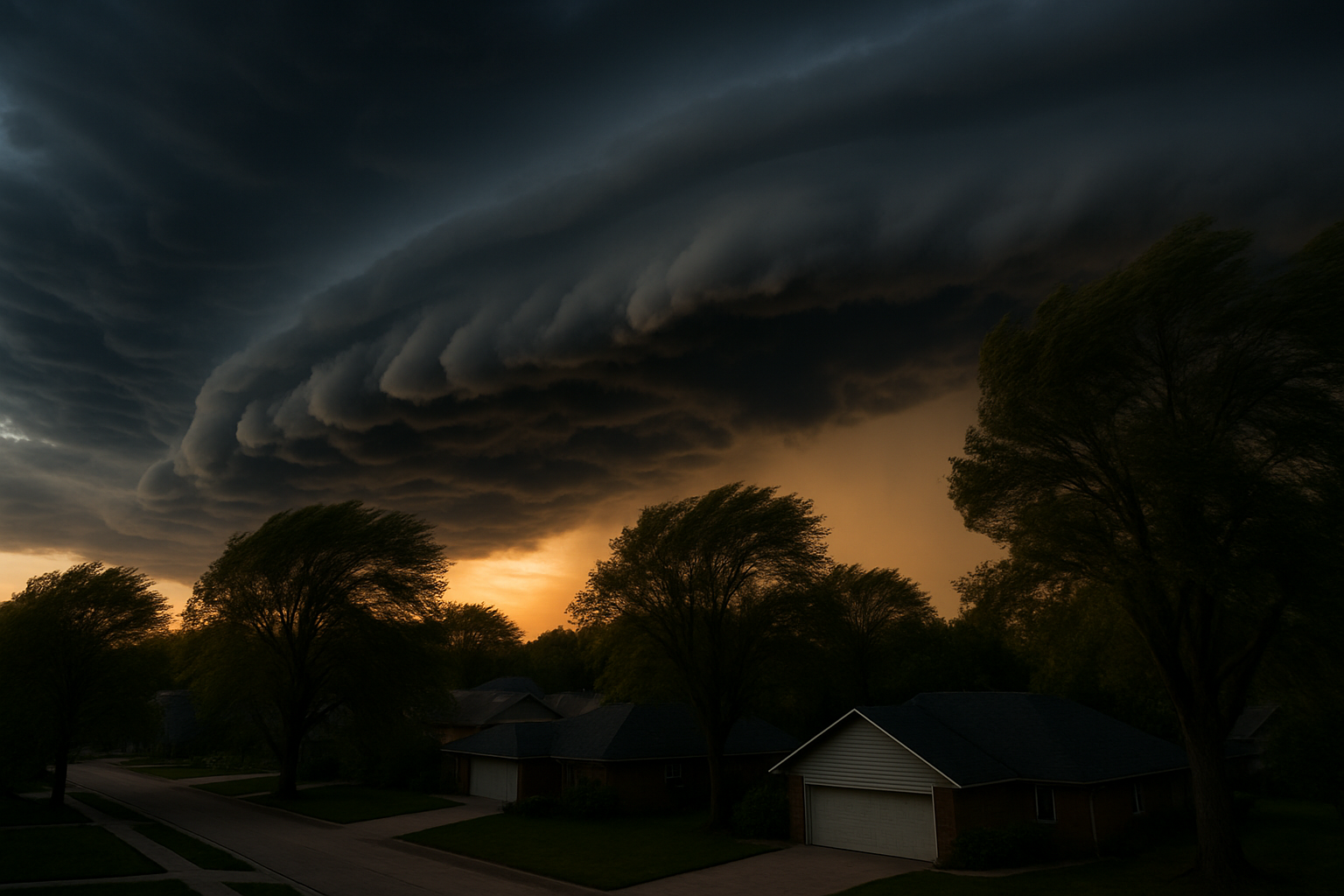
Damaging winds swept across southern Wisconsin on the evening of August 18, 2026, knocking down trees and power lines across communities in Waushara, Sauk, Juneau, Vernon, and Fond du Lac counties. The National Weather Service confirmed storm reports from at least eight communities — Hancock, Wautoma, Richford, Reedsburg, La Valle, Wonewoc, Hillsboro, and Taycheedah — as the system moved through the region during the late afternoon and into the evening hours.
A private weather station in Richford, Waushara County, recorded a peak wind gust of 61 mph at approximately 4:15 PM CDT, according to NWS Green Bay storm reports — a benchmark that puts this event well within the range capable of causing meaningful structural stress to roofing systems, siding, and trees across a wide area. Three separate NWS forecast offices — Green Bay (GRB), La Crosse (ARX), and Milwaukee (MKX) — each logged confirmed storm reports from the affected region. For homeowners in the impacted communities, the hours and days following a wind event like this are a critical window for identifying damage before the next rain turns a wind problem into a water problem.
What the National Weather Service Confirmed
The following damage was logged by three NWS forecast offices on August 18, 2026. These are confirmed local storm reports — not estimates or projections.
NWS Green Bay (GRB) — Waushara and Sauk Counties
- Hancock (Waushara County): Trees and power lines downed.
- Wautoma (Waushara County): Power lines downed.
- Richford (Waushara County): A private weather station measured a peak wind gust of 61 mph at approximately 4:15 PM CDT.
- Reedsburg (Sauk County): Broken tree limbs and fallen trees reported.
NWS La Crosse (ARX) — Juneau and Vernon Counties
- Wonewoc (Juneau County): A large tree split and downed.
- Hillsboro (Vernon County): A power line downed.
NWS Milwaukee (MKX) — Sauk and Fond du Lac Counties
- La Valle (Sauk County): A tree down.
- Taycheedah (Fond du Lac County): A tree downed across both lanes of Golf Course Road.
The geographic reach of these reports is notable. From Waushara County in the north to Fond du Lac County in the east, and west into Vernon County, this was not a localized, single-community event. Downed power lines and trees across roadways are surface-level indicators of wind forces that also work on roofing systems, siding panels, and flashing in ways that aren’t always immediately visible from street level. If your community is on this list — or nearby — your property deserves a careful, systematic look in the coming days.
What Homeowners in Hancock, Wautoma, Reedsburg, and Surrounding Areas Should Check Now
You don’t need to climb onto your roof to begin this process. Start safely from the ground and work through each system methodically. If you find something that concerns you, note it and photograph it — that documentation will matter if you file an insurance claim.
Roof
- From the ground, scan the roofline for missing, lifted, or curled shingles. Wind at 61 mph and above can break the adhesive seal on shingles without removing them entirely, leaving them vulnerable to the next rain event even when they appear intact from below.
- Look for debris impact zones — areas where broken branches have struck the roof surface, or where ridge cap material appears displaced or separated from the ridge line.
- Check flashing around chimneys, skylights, and vent pipes for any visible bending, lifting, or separation. Flashing is frequently the first point of failure in a wind event and is often missed during a ground-level scan.
- If you can safely access your attic, look for daylight visible through the roof deck, new water staining on insulation, or any sign of fresh debris intrusion — all indicators of a breach that needs immediate attention.
Siding
- Walk the full perimeter of your home looking for cracked, dented, or missing siding panels, especially on the windward side of the structure where storm forces were most direct.
- Inspect panel seams and corner trim for separation or lifting. Even a small gap in siding can allow wind-driven water to enter the wall cavity during the next storm, leading to moisture damage and mold that aren’t visible until they’ve progressed significantly.
Trees and Adjacent Property
- Look carefully for split trunks or large hanging limbs in trees near your home. These “widow makers” remain a hazard until properly removed by a qualified arborist — do not attempt to remove large hanging limbs yourself.
- Check whether any tree limbs are now resting against or in contact with your roof surface, gutters, or siding. Even light, ongoing contact causes abrasion and accelerated wear that compounds over time.
Gutters and Downspouts
- Inspect gutters for debris blockages, sagging sections, or detachment from the fascia board. Gutters that have pulled away from the house direct water toward the foundation rather than away from it — a problem that can surface weeks later as basement moisture or foundation issues.
- Confirm that downspout extensions at ground level are intact and properly routing water away from the structure’s perimeter.
Water Intrusion Indicators
- Inside your home, check upper-floor ceilings and exterior walls for new water stains, bubbling paint, or soft spots in drywall — any of these can signal that wind-driven rain found an entry point during the storm.
- Inspect around window frames and exterior door thresholds for evidence of leakage or new drafts that weren’t present before the storm.
Even if you observe nothing alarming from the ground, a professional roof inspection after a 61 mph wind event is a reasonable and often worthwhile step. Wind damage that doesn’t present as a visible breach can still allow water intrusion through loosened shingles or compromised flashing — damage that frequently shows up two or three rain events later, by which point the interior repairs are significantly more expensive than the original roof fix would have been.
If You Find Damage
Document Before You Touch Anything
If you discover damage to your home, your first priority is documentation — before any cleanup or temporary repairs begin. Take wide-angle photos that establish context for each area, close-up photos of specific damage, and interior photos of any water staining or intrusion. Video walkthroughs are especially useful for capturing the full picture. Record the date and time stamps on every image. This documentation forms the foundation of a credible insurance claim and helps ensure that nothing gets missed during the adjustment process.
Take Reasonable Steps to Prevent Further Loss
If you have active roof exposure — missing shingles, visible deck, or an active leak — reasonable temporary protection, such as a properly secured tarp, can prevent additional water damage while you await a professional inspection. Most homeowner insurance policies require policyholders to take reasonable steps to mitigate further loss after a storm event. Keep all receipts for any materials purchased for emergency temporary repairs, as these costs are often reimbursable under your policy.
File Your Claim Promptly
Contact your insurance company to report the damage as soon as practical. Your policy will specify claim filing timelines, and filing promptly ensures your insurer can begin the process of assigning an adjuster. Have your photo and video documentation ready when you call, along with the date of the storm and a summary of what you observed during your inspection.
Work With a Licensed Restoration Contractor
As a licensed restoration contractor with more than a decade of storm restoration experience in the Midwest, Allied Emergency Services can inspect your property, document storm damage in detail, and prepare comprehensive repair estimates. We are available to coordinate on-site with your insurance adjuster so that the full scope of damage is accurately assessed and nothing is overlooked. Allied acts as your restoration contractor — we perform covered repairs. We do not negotiate, settle, or adjust insurance claims on your behalf; that role belongs to your insurance company and, if you choose, a separately licensed public adjuster.
If you’re in Hancock, Wautoma, Richford, Reedsburg, La Valle, Wonewoc, Hillsboro, Taycheedah, or the surrounding communities across Waushara, Sauk, Juneau, Vernon, or Fond du Lac counties, our team can help you understand what the August 18 storm did to your property and what it will take to make it right. Learn more about our storm damage restoration services.
This article is provided as general information only and does not constitute legal, financial, or insurance advice. Consult a licensed insurance professional or attorney for guidance specific to your policy or situation.
Ready to Get an Assessment? Contact Allied Emergency Services
If you’re concerned about wind damage to your home or commercial property after the August 18, 2026 storm, don’t wait for the next rain to find out how serious it is. Undetected roof or siding damage from a wind event like this can allow water intrusion that compounds quickly — and the cost to address it grows with every storm that follows.
Allied Emergency Services is available 24 hours a day, 7 days a week for storm damage assessments across southern Wisconsin and the broader Midwest. We’re an Illinois-licensed roofing and restoration contractor, and our team knows what wind damage looks like — whether it’s obvious from the street or hiding in the flashing details on your roof. One call is all it takes to know where you stand.
- Call us 24/7: (800) 792-0212
- Text ESTIMATE to: (844) 907-2546
Our crews are ready to help you assess the situation, document the damage thoroughly, and get your property back to pre-storm condition. Learn more about our storm damage restoration process, or call now to schedule your inspection.
⚡ Storm or Roof Damage? Get a FREE Estimate
Text ESTIMATE to (844) 907-2546
Or call (800) 792-0212 for 24/7 emergency response
AI-powered • No obligation • Licensed IL & WI
Need severe weather damage help?
Allied Emergency Services — Licensed IL & WI Severe Weather Damage Specialists
For more than a decade, Allied has been restoring severe weather damage across Illinois and Wisconsin. IICRC-certified, EPA Lead-Safe, IL Licensed Roofing Contractor #104.019029. 24/7 emergency response.
Learn about our Severe Weather Damage service →Free property assessment within 24 hours · No obligation · Photo-documented findings you can share with your insurer
Attorneys: forensic storm damage documentation & construction expert consultation for counsel →