

⚡ Storm or Roof Damage? Get a FREE Estimate
Text ESTIMATE to (844) 907-2546
Or call (800) 792-0212 for 24/7 emergency response
AI-powered • No obligation • Licensed IL & WI
July 27, 2026 Orland Park Tornado: EF0 Track, Wind, Hail and Flooding
July 27, 2026 Orland Park Tornado: EF0 Track, Wind, Hail and Flooding
Article updated July 30, 2026. Event information reflects the National Weather Service Chicago update posted at 2:40 p.m. CDT on July 30.
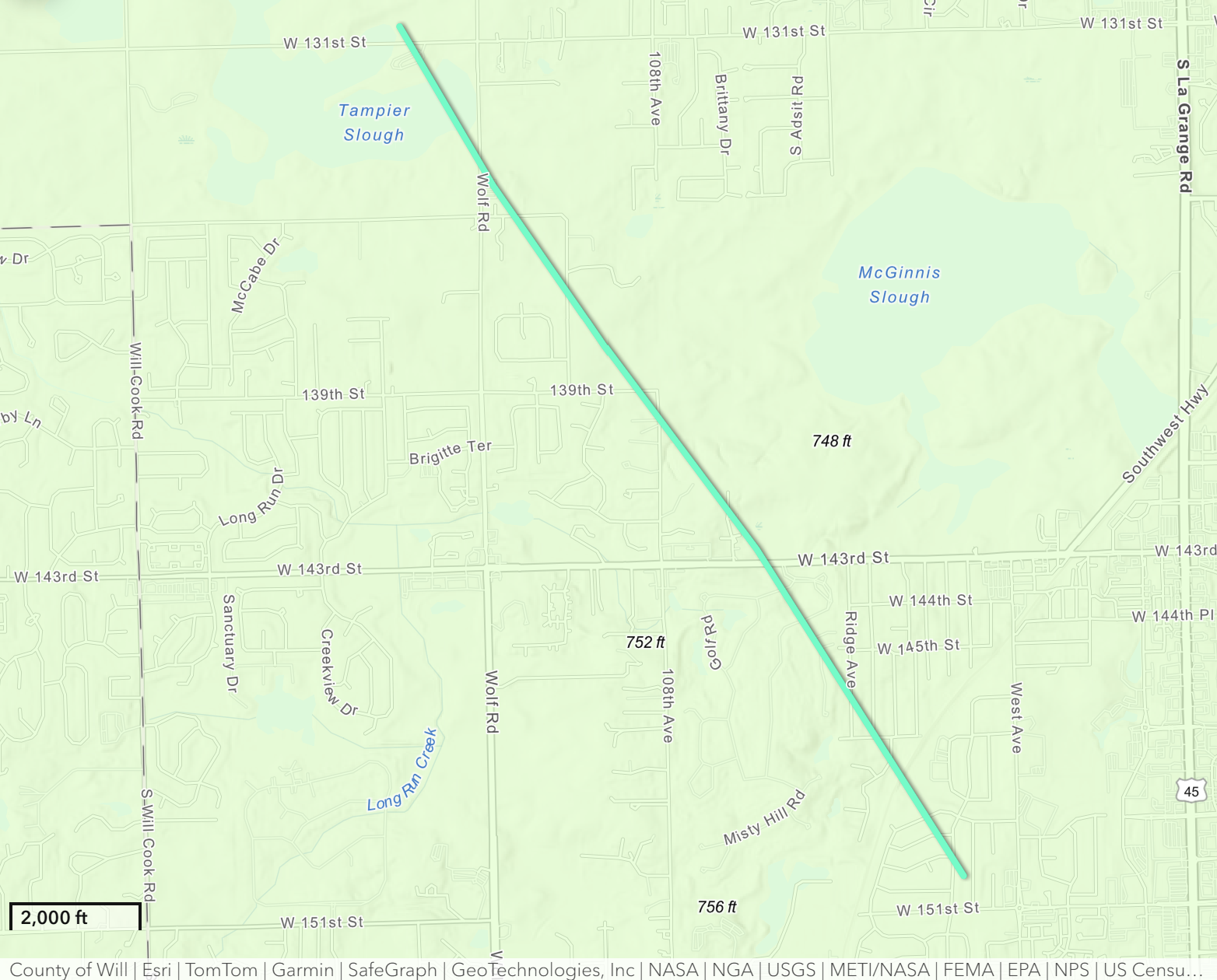
The National Weather Service confirmed that an EF0 tornado touched down in Orland Park, Illinois, on Monday, July 27, 2026. The NWS event table lists the Orland Park tornado from approximately 12:34 to 12:38 p.m. local time, with a 2.9-mile track.
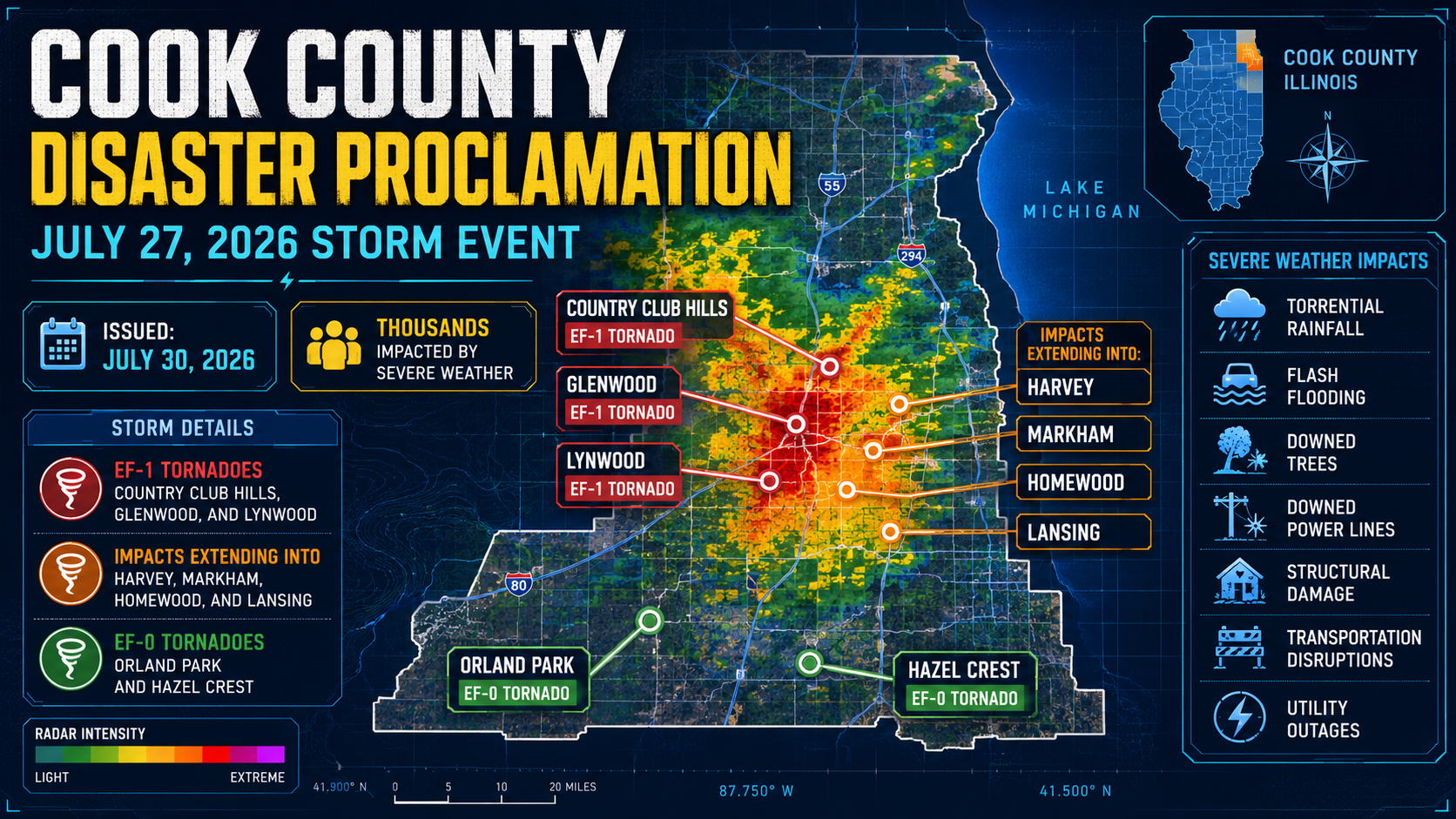
As of the July 30 update, NWS Chicago had confirmed seven tornadoes across its area of responsibility: five EF0 tornadoes and two EF1 tornadoes. The same severe weather event produced hail as large as 3 inches in diameter, widespread wind damage, torrential rain and areas of flash flooding. In some of the hardest-hit parts of southern Cook County and eastern Will County, NWS reported straight-line wind gusts of 80 to more than 90 mph.
Residents can view the official survey information and tornado track through the National Weather Service Chicago July 27 severe weather event page.
Orland Park tornado quick facts
| Storm fact | Confirmed information |
|---|---|
| Event date | Monday, July 27, 2026 |
| Orland Park tornado rating | EF0 |
| Approximate tornado time | 12:34–12:38 p.m. local time |
| Orland Park track length | 2.9 miles |
| Total tornadoes confirmed by NWS Chicago | 7 as of the July 30 update |
| Rating breakdown | 5 EF0 tornadoes and 2 EF1 tornadoes |
| Largest hail reported during the regional event | Up to 3 inches in diameter |
| Strongest reported straight-line winds | 80–90+ mph in some areas of southern Cook and eastern Will counties |
| Additional hazard | Torrential rain and localized flash flooding |
| Cook County residential survey deadline | August 5, 2026, according to the supplied Village notice; verify the current deadline |
Tornado-count clarification
Some initial community information described the Orland Park tornado as one of five tornadoes. The later NWS Chicago update supplied for this article lists seven total confirmed tornadoes. Five of the seven were rated EF0, including the Orland Park tornado, while two were rated EF1.
Because storm surveys may continue after an event, the total and individual track details should always be attributed to a dated National Weather Service update.
July 27, 2026 Chicago-area severe weather statistics
The seven tornado tracks listed in the supplied NWS table had a combined listed length of 24.5 miles. Allied Emergency Services calculated the following summary directly from those seven track lengths:
| Statistical summary | Result |
|---|---|
| Confirmed tornadoes | 7 |
| Combined listed track length | 24.5 miles |
| Average track length | 3.5 miles |
| Median track length | 2.5 miles |
| EF0 tornadoes | 5, or approximately 71% |
| EF1 tornadoes | 2, or approximately 29% |
| Longest listed track | 11.4 miles |
| Orland Park track | 2.9 miles |
These calculations reflect the tornado list available in the NWS update supplied for this article and may change if later survey information revises a rating or path.
Confirmed tornado list
| Location | Approximate time | EF rating | Track length |
|---|---|---|---|
| Wheaton, Illinois | 11:55–11:57 a.m. | EF0 | 1.0 mile |
| Glen Ellyn, Illinois | 11:55–11:57 a.m. | EF0 | 0.9 mile |
| Downers Grove, Illinois | 12:09–12:13 p.m. | EF0 | 2.1 miles |
| Romeoville, Illinois | 12:28–12:33 p.m. | EF0 | 2.5 miles |
| Orland Park, Illinois | 12:34–12:38 p.m. | EF0 | 2.9 miles |
| Country Club Hills–Glenwood, Illinois | 12:47–1:03 p.m. | EF1 | 11.4 miles |
| Lynwood, Illinois–Munster, Indiana | 12:58–1:05 p.m. | EF1 | 3.7 miles |
The Country Club Hills–Glenwood tornado also affected portions of Hazel Crest, Markham, Harvey, East Hazel Crest and Homewood. The Lynwood–Munster tornado also affected portions of Lansing, Illinois.
What caused the July 27 severe weather?
According to the NWS Chicago event overview, intense heat and oppressive humidity produced extreme atmospheric instability across the region. A weather disturbance interacting with that instability generated a relatively narrow corridor of thunderstorms from eastern Wisconsin into northeastern Illinois during the late morning.
An unusually high degree of wind shear allowed some storms to become severe quickly. Intense supercell thunderstorms then moved southeast, producing tornadoes, damaging hail and extensive wind damage. A later line of storms originating in eastern Wisconsin caused additional scattered wind damage across parts of the Chicago metropolitan area.
The exceptionally moist air mass also supported torrential rainfall rates. Those intense downpours caused localized flooding, including notable flash flooding in suburbs outside Chicago.
Was all of the damage caused by the Orland Park tornado?
No. A tornado track represents only one part of a larger severe weather event.
The National Weather Service reported that most of the damage in and near the Chicago metropolitan area was caused by strong to destructive straight-line winds, rather than tornadoes. Portions of southern Cook County and eastern Will County were among the hardest hit.
Communities identified by NWS included:
- Chicago Heights, Ford Heights, Sauk Village and Steger
- Crete, Monee, University Park and Frankfort
- Beecher and nearby areas of southern Cook and eastern Will counties
Some of these locations experienced estimated or measured wind gusts of 80 to more than 90 mph, resulting in substantial tree damage and multiple instances of notable structural damage.
For property owners, the distinction between tornado and straight-line wind is important for understanding the event, but both can lift roof coverings, break windows, remove siding, damage gutters, topple trees and allow water into a structure. The cause at a specific building should be evaluated through a documented property inspection.
What Orland Park property owners should inspect after the storm
An EF0 rating does not mean every affected property experienced minor damage. Tornado ratings describe the surveyed event; they do not determine the repair cost or condition of an individual home or commercial building.
Property owners should not climb onto a wet, steep or damaged roof. Many storm-related defects can be difficult to identify without safe access and professional inspection.
Roof and attic damage
Potential signs of Orland Park storm damage include:
- Missing, lifted, folded or creased shingles
- Displaced ridge caps or damaged roof edges
- Punctures from branches or windborne debris
- Dented metal vents, flashing and roof accessories
- Cracked skylights or damaged chimney components
- Exposed roof decking or torn underlayment
- Wet attic insulation, daylight through the roof or active dripping
- Ceiling stains that appear hours after the storm
Wind damage may occur without removing an entire shingle. A shingle can be unsealed, creased or fractured while appearing relatively normal from the ground.
Siding, windows, gutters and decks
Inspect exterior walls and openings for:
- Loose, cracked, punctured or missing siding
- Dents in aluminum siding, fascia, gutters and downspouts
- Broken glass, damaged screens or failed window seals
- Water entering around window and door openings
- Detached soffit or fascia
- Gutters pulled away from the roof edge
- Deck railings or stairs loosened by falling limbs
- Deck framing, posts or ledger connections displaced by impact
Cosmetic damage should not be assumed to be the only issue. Siding or trim damage can expose the water-resistive layer and concealed wall components to rain.
Water, electrical and structural damage
Seek immediate professional help when there are signs of:
- Sagging ceilings or wet drywall
- Saturated insulation or standing water
- A wet electrical panel, outlets or wiring
- Gas odors or damaged utility equipment
- Racked door or window openings
- New structural cracks
- Bowed walls, shifted framing or roof sagging
- Unstable trees or branches over the building
Do not enter an area with a suspected electrical, gas, collapse or falling-tree hazard. Contact emergency services or the appropriate utility when life safety is involved.
What to do after Orland Park storm damage
Property owners can take the following steps while protecting personal safety:
- Address immediate hazards. Stay away from downed electrical lines, damaged utility equipment, unstable trees and visibly compromised structures.
- Photograph the property before cleanup. Capture wide views of each elevation, close-up damage, interior water intrusion, debris and damaged personal property.
- Prevent additional damage when it is safe. Temporary roof tarping, board-up work, water extraction and moving undamaged contents may reduce further loss.
- Keep receipts and a written activity log. Record emergency expenses, contractor visits, insurer communications and the date each condition was discovered.
- Notify the insurance carrier. Report the loss promptly and ask what documentation, inspections and temporary repair procedures are required under the policy.
- Avoid unnecessary permanent work before documentation. Emergency mitigation should not be delayed, but non-emergency reconstruction should be coordinated with the insurer and documented carefully.
- Arrange a qualified storm damage inspection. The inspection should address the roof, siding, windows, gutters, attic, interior moisture and visible structural conditions.
An NWS storm report helps document that severe weather occurred in the region, but it does not by itself prove the cause or extent of damage at a particular address. Property-specific photographs, measurements, inspection findings and repair estimates remain important.
Cook County residential damage self-assessment survey
The Village notice supplied for this article asked residents with storm damage to complete the Cook County residential damage self-assessment survey by August 5, 2026.
The purpose of the survey is to help local officials document the event’s overall impact and pursue any assistance that may become available. Completing the community survey is separate from reporting an insurance claim and does not guarantee financial assistance.
Residents should use only an official Village, County or verified government link. Storm-related messages requesting unusual payments or sensitive information should be treated cautiously.
How much can Orland Park storm damage repair cost?
The cost of Orland Park storm damage restoration is not determined by the EF rating. Pricing depends on the measured damage, building size, roof slope, number of stories, access, material availability, emergency conditions, code requirements, permit fees and whether structural drying or engineering is needed.
The following broad figures are for preliminary budgeting only. They are not quotes, verified July 2026 market averages or insurance coverage determinations. Allied should approve or replace these ranges with current local pricing before publication.
| Storm restoration service | Broad planning range |
|---|---|
| Emergency roof tarp or limited board-up | $350–$2,500+ |
| Localized roof repair | $750–$4,000+ |
| Full asphalt-shingle roof replacement | $10,000–$30,000+ |
| Localized siding repair | $750–$5,000+ |
| Full siding replacement | $15,000–$40,000+ |
| Window, glass or exterior trim work | $500–$2,000+ per opening |
| Gutter and downspout replacement | $1,500–$6,000+ |
| Water extraction and structural drying | $2,000–$10,000+ |
| Emergency tree or debris removal | $750–$6,000+ |
| Structural framing or major reconstruction | Site-specific inspection and scope required |
A complete written estimate should distinguish among:
- Emergency mitigation and temporary protection
- Demolition and debris disposal
- Labor and permanent materials
- Roof decking, wall sheathing or concealed damage
- Water extraction, drying and microbial prevention
- Permit and inspection costs
- Code-required components
- Engineering or specialized access
- Taxes, overhead and other documented project expenses
Two estimates with very different totals may not include the same work. Property owners should compare line-item scope, quantities, materials, permit responsibility and code compliance—not only the final price.
Orland Park Storm damage Repair
Orland Park building code and permit considerations
Permanent storm repairs should comply with the codes and amendments currently adopted by the Village of Orland Park, applicable Illinois requirements, manufacturer installation instructions and permit conditions.
The exact code editions and local amendments should be confirmed with the Village before permanent construction begins. Depending on the property and scope, the applicable framework may include locally adopted versions of the International Residential Code, International Building Code and related electrical, mechanical, plumbing and energy provisions.
Code items that may affect a storm repair scope
For roofing work, the contractor should evaluate:
- Existing roof-covering layers and whether removal is required
- Roof deck condition and replacement of deteriorated sections
- Underlayment and ice-barrier requirements
- Drip edge, valleys, wall flashing and roof penetrations
- Roof ventilation
- Fastener type, placement and wind-resistant installation
- Manufacturer-approved installation details
For siding and exterior wall work, the scope may need to address:
- Water-resistive barriers
- Flashing around windows, doors and wall penetrations
- Required siding clearances and fastening
- Concealed sheathing damage
- Manufacturer installation requirements
For windows, doors and structural repairs, applicable issues may include:
- Opening flashing and water management
- Safety glazing in required locations
- Emergency escape and rescue opening requirements where applicable
- Structural framing, sheathing and connections
- Engineering review for significant movement or impact
- Electrical inspection when wiring or service equipment is affected
The goal is not simply to restore the appearance of the building. The permitted repair must satisfy the requirements that apply to the actual scope. Code-related work and permit expenses should be documented separately in the estimate. Insurance coverage for upgrades or ordinance-and-law items depends on the individual policy.
Insurance documentation after wind, hail and water damage
Insurance coverage depends on the policy language, cause of loss, deductible, exclusions and endorsements. Wind, hail, roof-related water intrusion, sewer backup and surface flooding may be evaluated differently.
Useful documentation includes:
- Date- and time-stamped photographs
- Video of each affected room and exterior elevation
- A room-by-room damage inventory
- Moisture readings and drying records
- Temporary repair invoices
- Contractor measurements and photographs
- Permit or code information
- Written insurer communications
- The NWS event page and local storm reports
Property owners should ask the carrier how the policy treats emergency mitigation, matching materials, hidden damage, code-required work, debris removal and water entering from different sources.
How to avoid storm-repair scams
Severe weather often brings an increase in high-pressure sales activity. Before signing a storm restoration agreement:
- Verify credentials currently required for the trade and jurisdiction.
- Request proof of general liability coverage and workers’ compensation where applicable.
- Confirm who will obtain permits and schedule inspections.
- Require a written scope identifying materials, quantities, payment terms and warranties.
- Do not sign blank contracts, blank claim documents or incomplete authorizations.
- Avoid contractors who guarantee that an insurance company will pay for all work.
- Do not make a large payment solely because a salesperson claims materials will otherwise be unavailable.
- Confirm the contractor’s business identity, physical contact information and references.
- Read cancellation, financing and dispute provisions before signing.
A reputable storm restoration contractor should be able to explain the difference between emergency mitigation, permanent repairs, insurance documentation and code-required construction.
Frequently asked questions about the Orland Park tornado
Was there a tornado in Orland Park on July 27, 2026?
Yes. National Weather Service Chicago confirmed an EF0 tornado in Orland Park during the July 27 severe weather event.
What time did the Orland Park tornado occur?
The supplied NWS event table lists the Orland Park tornado from approximately 12:34 to 12:38 p.m. local time.
How long was the Orland Park tornado track?
The confirmed track was listed at 2.9 miles.
Were there five or seven tornadoes?
The NWS Chicago update posted at 2:40 p.m. CDT on July 30 listed seven confirmed tornadoes: five EF0 tornadoes and two EF1 tornadoes. Orland Park was one of the five EF0 tornadoes.
Was most of the regional damage caused by tornadoes?
No. NWS reported that the majority of the damage in and near the Chicago metropolitan area was caused by strong to destructive straight-line winds.
Did the storm produce 3-inch hail in Orland Park?
NWS reported hail up to 3 inches in diameter during the broader July 27 event. That does not establish the exact hail size at every Orland Park address. Property-specific damage and local hail data should be evaluated separately.
Does an EF0 rating mean the property damage will be inexpensive?
No. An EF0 rating does not limit the cost of damage from falling trees, roof openings, water intrusion, damaged siding, broken windows or structural impacts. Repair cost must be determined from the building-specific scope.
Should emergency repairs wait for an insurance inspection?
Life-safety work and reasonable temporary measures to prevent additional damage should not be unnecessarily delayed. Photograph conditions first when possible, keep all receipts and coordinate non-emergency permanent repairs with the insurer.
Where can residents view the official tornado track?
The track and event information are available on the National Weather Service Chicago event page.
Sources and methodology
The tornado ratings, times, listed track lengths, hail information, wind information, affected communities and weather overview in this article are attributed to the National Weather Service Chicago July 27, 2026 severe weather and flooding summary, using the update supplied as of 2:40 p.m. CDT on July 30, 2026.
The 24.5-mile combined path length, 3.5-mile average, 2.5-mile median and EF-rating percentages were calculated from the seven track lengths shown in the supplied NWS table.
The August 5 Cook County residential damage survey deadline is based on the Village recovery notice supplied for this draft. The complete official Survey123 URL must be inserted and verified before publication.
Orland Park storm recovery summary
The confirmed Orland Park tornado was one part of a larger and unusually intense July 27 severe weather event. Although the Orland Park tornado was rated EF0, NWS findings show that tornadoes were not the only serious hazard. Destructive straight-line winds, large hail and torrential rain caused widespread damage throughout the Chicago region.
Prompt documentation, safe temporary mitigation, a complete property inspection and a code-compliant repair scope can help reduce additional damage and support an organized recovery.
For immediate service or consultation, you may contact us at Allied Emergency Services, INC.
Contact Information:
Phone: 1-800-792-0212
Email: Info@AlliedEmergencyServices.com
Location: Serving Illinois, Wisconsin, and Indiana with a focus on the greater Chicago area.
If you require immediate assistance or have specific questions, our human support is readily available to help you.
Disclaimer: This article is intended for informational purposes only. For professional advice, consult experts in the field.
⚡ Storm or Roof Damage? Get a FREE Estimate
Text ESTIMATE to (844) 907-2546
Or call (800) 792-0212 for 24/7 emergency response
AI-powered • No obligation • Licensed IL & WI
Need tornado damage help?
Allied Emergency Services — Licensed IL & WI Tornado Damage Specialists
For more than a decade, Allied has been restoring tornado damage across Illinois and Wisconsin. IICRC-certified, EPA Lead-Safe, IL Licensed Roofing Contractor #104.019029. 24/7 emergency response.
Learn about our Tornado Damage service →Free property assessment within 24 hours · No obligation · Insurance claim support
Attorneys: forensic storm damage documentation & construction expert consultation for counsel →