

⚡ Storm or Roof Damage? Get a FREE Estimate
Text ESTIMATE to (844) 907-2546
Or call (800) 792-0212 for 24/7 emergency response
AI-powered • No obligation • Licensed IL & WI
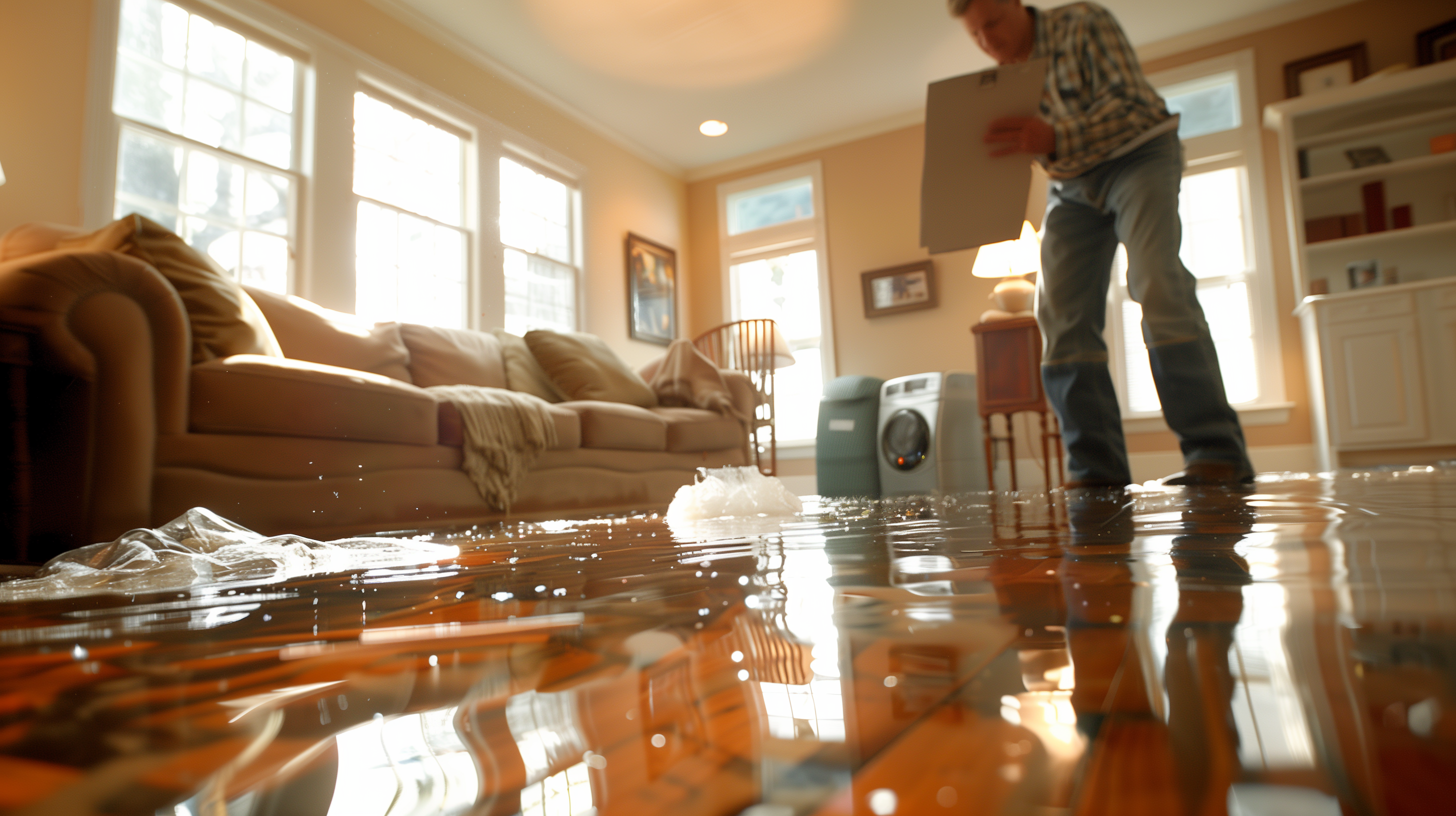
The water spreading across your basement floor may look like “just water” — but in the world of professional restoration, not all water is equal. Whether it came from a backed-up sewer line, an overflowing toilet, or storm flooding that pushed through your foundation wall, the source of that water determines everything: the health risks involved, the protective equipment your remediation crew must wear, which materials can be salvaged versus torn out, and how extensive the cleanup must be to meet recognized industry standards. Understanding these distinctions isn’t just jargon — it directly affects how long your family is displaced, how thoroughly your home is restored, and what documentation supports your path through the insurance process.
The framework that restoration professionals use to classify water damage comes from the IICRC S500 Standard for Professional Water Damage Restoration — a technical consensus document published by the Institute of Inspection, Cleaning and Restoration Certification (IICRC). The S500 establishes two parallel classification systems: Categories, which describe the level of contamination in the water source, and Classes, which describe how deeply moisture has been absorbed into building materials. Together, these two classifications drive every decision a restoration contractor makes, from initial extraction through final drying verification. Allied Emergency Services has operated under this standard since our founding in 2015, and our IICRC Certified Firm technicians apply it on every water loss we respond to across Illinois.
This guide breaks down the S500 framework in plain language for Illinois homeowners. We cover what Category 1, 2, and 3 water mean in practice; how Classes 1 through 4 determine the scope of drying work; what personal protective equipment our crews use and why; which building materials must be removed versus dried in place; and what a proper documentation package looks like when the work is complete. This article is general educational information — not legal or insurance advice. For guidance specific to your policy or loss, consult a licensed public adjuster or legal counsel.
The IICRC S500 Standard: Why It Matters for Your Home
What Is the IICRC?
The Institute of Inspection, Cleaning and Restoration Certification is an ANSI-accredited standards development organization. It produces and maintains consensus-based technical standards used by professional restorers throughout North America and internationally. The S500 — currently in its fifth edition — is the foundational reference document for water damage restoration work. A companion standard, the IICRC S520 Standard for Professional Mold Remediation, applies whenever mold is confirmed or suspected alongside water damage, which is common in losses where moisture has been present for 48 hours or more.
When you hire a restoration contractor who tells you they follow “industry standards,” it is worth asking specifically which edition of the S500 they reference and whether their technicians hold individual IICRC credentials. The standard has evolved meaningfully across editions, particularly in how it addresses Category 2 and Category 3 losses, microbial contamination thresholds, and drying verification requirements. Allied Emergency Services maintains active IICRC Certified Restoration Firm status (Firm #70133670) and requires our lead technicians to hold individual credentials as well.
Why the Standard Exists
Before the S500 provided a shared framework, restoration contractors made judgment calls without a consistent scientific basis, and homeowners had no reliable way to verify whether a remediation was thorough or dangerously incomplete. The S500 addresses this gap by establishing defined contamination categories with corresponding response protocols, scientific drying goals derived from psychrometric principles and material moisture behavior, documentation requirements that protect both the property owner and the contractor, and equipment standards for air movers, dehumidifiers, and monitoring instrumentation.
Insurance carriers, independent inspection firms, and — in disputed situations — courts have come to recognize S500-compliant practice as the benchmark for professional water damage work. When your loss goes to a desk adjuster or an independent third-party inspector, a documented and structured remediation file is far more defensible than verbal assurances or undocumented work. The standard exists to protect you.
Water Categories: How Contaminated Is the Source?
The S500 defines three categories of water based on the contamination level present at the time of the loss and at the time of professional response. One of the most important details homeowners often miss: category can escalate over time. A Category 1 loss that goes unaddressed for several days may be reclassified to Category 2 or Category 3 due to microbial growth, ambient temperature, and cross-contamination from building materials. Time is always working against you.
Category 1 — Clean Water
Category 1 water originates from a sanitary source and presents no substantial risk from skin contact, ingestion, or inhalation under normal exposure conditions. Common sources include broken supply lines or faucet connections, overflowing bathtubs or sinks not containing contaminants, malfunctioning appliances connected to a potable water supply (such as a dishwasher supply line or refrigerator ice-maker line), rainwater collected indoors before contacting building materials, and certain early-stage roof leaks where no biological contamination has occurred.
Category 1 losses are the most straightforward from a health and safety standpoint. Wet materials that are dried quickly — ideally within 24 to 48 hours — can often be salvaged without demolition. However, clean water still creates ideal conditions for mold growth if materials remain wet beyond 48 to 72 hours. At that point, the loss may need to be reclassified, and the scope of work expands accordingly. Speed of response is the single biggest factor in keeping a Category 1 loss from becoming something far more costly.
Category 2 — Gray Water
Category 2 water contains significant contamination with the potential to cause discomfort or illness upon contact or ingestion. Sources include toilet overflow with urine but no feces present, washing machine or dishwasher overflow, sump pump failure discharging collected groundwater, broken aquarium water, and hydrostatic pressure seepage through foundation walls or floor cracks in certain conditions.
Gray water contains biological, chemical, and physical contaminants that require a more aggressive response than Category 1. Porous materials that cannot be adequately cleaned and dried to standard within the appropriate time window are typically removed rather than dried in place. Category 2 losses left unaddressed for more than 48 to 72 hours — or occurring in warm, humid environments that accelerate microbial activity — are routinely reclassified as Category 3, requiring the full protocol described below.
Category 3 — Black Water
Category 3 is the most severe contamination level defined by the S500. This water is grossly contaminated and may contain pathogens — including bacteria, viruses, and protozoa — that pose a genuine health risk to building occupants and workers. No Category 3 water source should be treated as less serious based on appearance alone. Standing water that looks relatively clear can still carry dangerous microbial loads when the source is sewage-connected or exterior flooding.
Common Category 3 sources include: sewage backup of any kind (all sanitary sewer water is Category 3, without exception); toilet overflow involving any feces; floodwater originating outside the structure — rivers, streams, storm drainage, surface runoff; groundwater intrusion through foundation walls or floor during a flooding event; and seawater intrusion in coastal situations. Any porous building materials — drywall, insulation, carpet, padding, ceiling tiles — wetted by Category 3 water are almost always removed and disposed of, not dried in place. The S500’s guidance is unambiguous on this point, and responsible contractors do not deviate from it based on cost pressure or homeowner preference.
Illinois homeowners frequently encounter Category 3 losses during heavy rain events that overwhelm combined sewer systems, causing raw sewage to back up into basement drains. This is not a rare or unusual scenario — it is one of the most common water damage events we respond to across the Chicago metro area, collar counties, and downstate communities with aging municipal infrastructure. If your basement has ever experienced a floor drain backup during a heavy storm, it was a Category 3 event.
Water Classes: How Much Did the Structure Absorb?
While Categories describe contamination, Classes describe the scope of moisture absorption into building materials. The S500 defines four classes. Class assignment drives the drying system design — how many air movers are needed, what capacity dehumidifier is required, whether wall cavities must be opened to achieve acceptable airflow, and how long the drying process will realistically take. Misassigning the class leads to undersized equipment, failed drying, and preventable mold growth after the contractor leaves.
Class 1 — Minimal Absorption
Class 1 losses involve only a small portion of a room, and affected materials are primarily low-porosity surfaces with slow water absorption rates. If carpet and pad are involved, the area is limited. Little moisture has migrated into wall cavities or subfloor assemblies. Class 1 losses require the least equipment and typically resolve within two to three days under proper drying conditions. They are the most favorable outcome when response is fast and the source is Category 1 or 2.
Class 2 — Significant Absorption
Class 2 losses affect an entire room or a large portion of it. Moisture has wicked into wall materials to a height of at least 24 inches above the floor line, and carpet, pad, and structural wood materials within the affected area are wet throughout. Class 2 situations require meaningfully more equipment than Class 1 and typically take three to five or more days to reach drying goals, depending on material composition, the size of the area, and ambient psychrometric conditions. Opening wall cavities for directed airflow is often required.
Class 3 — Maximum Absorption
Class 3 represents the greatest level of moisture absorption. Water typically entered from above — a ceiling collapse, a long-running upstairs bathroom leak, a major roof intrusion — and has saturated walls from ceiling to floor, ceilings and their cavities, insulation throughout, and subfloor assemblies. This is also the typical classification for basement flooding events where the entire finished space is inundated. Class 3 losses require the most equipment and the longest drying timelines; five days to several weeks is a realistic range depending on the materials, the depth of saturation, and when remediation began relative to the loss event.
Class 4 — Specialty Drying
Class 4 applies to materials with very low porosity or permeance that require specialty drying techniques beyond conventional air movement and refrigerant dehumidification. Examples include solid hardwood flooring (which requires low-grain refrigerant or desiccant dehumidification to drive moisture out without causing cupping, crowning, or delamination), thick plaster walls and ceilings, concrete slabs, and brick or masonry assemblies. Allied’s technicians are trained to configure low-grain refrigerant (LGR) and desiccant drying systems when Class 4 conditions are identified during the initial assessment, and we monitor these materials with the appropriate instrumentation throughout the drying cycle.
PPE Requirements for Category 3 Remediation
Personal protective equipment is not optional on a Category 3 loss, and the level of protection required exceeds what most homeowners expect to see. The S500, in conjunction with applicable OSHA standards, establishes minimum PPE requirements based on the hazard level present. What our crews wear on a Category 3 job reflects the actual biological risks in the environment — not theater.
Respiratory Protection
At minimum, a NIOSH-approved N95 filtering facepiece respirator is required for Category 3 environments. When the work involves significant disturbance of contaminated materials — demolition, cutting, debris removal — a half-face air-purifying respirator with combination cartridges (particulate filtration plus organic vapor) is the appropriate step up. Full-face respirators may be required in confined spaces, enclosed basement environments with limited ventilation, or when elevated sewage gas concentrations are possible. Our crews are respirator fit-tested and trained in accordance with OSHA’s respiratory protection standard.
Body and Skin Protection
- Disposable Tyvek coveralls for all personnel entering the affected area
- Waterproof nitrile or rubber gloves — double-gloving is standard practice during initial entry and material removal phases
- Waterproof rubber boots extending above the ankle, or waterproof boot covers over work boots, sealed at the top
- Safety glasses or chemical splash goggles based on splash exposure risk
Decontamination Protocol
PPE is not only about what you wear in — it is equally about how you exit. Allied’s Category 3 protocols require a defined decontamination zone established at the boundary of the containment area. Technicians remove outer gloves and boot covers before crossing the containment boundary, with all disposable materials bagged immediately within the contained zone. Reusable PPE components are disinfected before reuse or reentry. This decontamination discipline is particularly important in residential settings where family members — including children, elderly residents, and pets — may be present in adjacent areas of the home. Sewage-associated pathogens including E. coli, Salmonella, hepatitis A virus, and norovirus represent documented exposure concerns in Category 3 environments and must be treated as real risks, not remote possibilities.
Containment: Keeping Contamination Where It Belongs
Containment is one of the most critical steps in Category 3 remediation — and one of the most frequently under-executed by contractors who prioritize speed over rigor. Without proper containment, the act of demolition and material removal actively spreads contaminated dust, aerosolized water droplets, and microbial spores into unaffected areas of the home. A properly contained job keeps the contamination zone defined and measurable; a poorly contained job turns a basement problem into a whole-house problem.
Physical Containment Setup
For Category 3 losses, Allied establishes 6-mil polyethylene sheeting across all openings connecting the affected area to the rest of the structure, sealed with tape at all seams, edges, and penetrations. A negative air machine (NAM) — a HEPA-filtered unit that exhausts filtered air to the building exterior — is placed within the contained zone to maintain negative air pressure differential relative to adjacent areas. This pressure differential ensures that air movement flows from clean areas into the contaminated zone, and never the reverse. Zippered access panels in the poly barrier allow technician entry and exit without breaking containment. On larger or more heavily contaminated jobs, a double-barrier airlock entry is established.
Why Negative Air Pressure Matters
Without negative air pressure, opening contaminated walls or removing saturated flooring sends contaminated airborne particulates into hallways, bedrooms, closets, and HVAC systems. The HVAC system deserves particular attention: if a return air vent is located within or near the affected area and the system is operating normally, it can distribute contamination to every room in the house within a matter of hours. Allied’s protocol includes verifying that the HVAC system serving the affected zone is shut down prior to any disturbance of contaminated materials, and documenting this verification in the project file. Forgetting this step is one of the most consequential mistakes a restoration crew can make on a sewage or flood job.
What Gets Removed vs. What Gets Dried
This is the question Illinois homeowners ask most frequently, and the answer depends on a clear-eyed combination of Category, Class, material type, and elapsed time. The S500’s guidance has grown more stringent with successive editions, reflecting accumulated scientific research on microbial contamination of porous building materials and the inadequacy of surface cleaning as a substitute for removal in Category 3 scenarios.
Materials Typically Removed in Category 3 Losses
The following materials are removed and disposed of when affected by Category 3 water. In practice, there are essentially no compliant exceptions:
- Carpet and carpet pad — Carpet fiber is highly absorbent and impossible to adequately decontaminate after Category 3 exposure. Pad is open-cell foam with no realistic cleaning path under any available method.
- Drywall (gypsum wallboard) — Gypsum board is porous and cannot be adequately cleaned or disinfected after Category 3 contamination. Standard practice is removal to a minimum of 12 inches above the visible water line — and in most real-world applications, to the next full stud bay height (typically 4 feet or the full wall height) to allow proper inspection, cleaning, and airflow through the wall cavity.
- Fiberglass batt and cellulose insulation — Removed whenever wall or floor cavities are opened. These materials are not cleanable, and saturated insulation significantly impedes structural drying even after surface materials are removed.
- Acoustical ceiling tiles — Highly absorbent, not restorable after contamination. Always removed and replaced.
- Particleboard and OSB subfloor assemblies — Engineered wood panel products delaminate under saturation and typically require removal, particularly in Category 3 conditions where cleaning and re-use of the material below finished flooring is not defensible.
Materials That May Be Restored
Not everything touched by water must be discarded. Some materials can be cleaned, disinfected, and dried in place when contamination contact was limited, contamination level permits, and drying goals are achievable:
- Concrete slab floors and block foundation walls — Non-porous, cleanable, and disinfectable. Structural drying protocols apply to drive residual moisture out of the slab and into the dehumidification system.
- Ceramic and porcelain tile over concrete — Can generally be cleaned and disinfected. Grout lines and any underlayment require individual evaluation based on saturation depth and material type.
- Dimensional lumber (wall studs, floor joists, plates) — Structurally sound dimensional lumber can often be dried in place after contaminated wallboard and insulation are removed and the cavity is opened. Following drying, an EPA-registered antimicrobial agent appropriate for the surface is applied. Moisture content is monitored until drying goals are confirmed on two consecutive days before the cavity is closed.
- Solid hardwood flooring (Category 1 or limited Category 2) — Potentially restorable with specialty drying in lower-category losses. Category 3 exposure to hardwood is evaluated on a case-by-case basis; restoration is not the default outcome.
The “12-Inch Rule” and Real-World Practice
The IICRC S500 recommends removing affected drywall to a minimum of 12 inches above the visible water line in Category 3 losses. In practice, Allied typically removes to the 4-foot mark or higher for several sound reasons: moisture wicks significantly higher than visible staining or tide marks; the wall cavity above the water line must be inspected to confirm the actual contamination boundary; and removing to a full 4-foot or full-height lift is more practical for reinstallation and finishing. A contractor who cuts only to the stained line is not necessarily following the standard — they may be following their estimate, which is a different document.
Drying Goals and Daily Monitoring
The drying process is not complete when affected materials feel dry to the touch. The S500 defines specific moisture content targets — called drying goals — for building materials based on regional equilibrium moisture content (EMC) norms. Drying to feel or to visual appearance is not a professional standard; drying to instrument-measured material moisture content is.
For Illinois, EMC targets for wood-based structural materials typically fall in the 9 to 13 percent moisture content range by weight, depending on the season, ambient indoor conditions, and the specific wood species. Allied uses calibrated pin-type and pinless moisture meters, thermal hygrometers, and full psychrometric calculations to track the drying process. All readings are logged daily on a structured drying log that becomes part of the permanent project file.
Key monitoring points include structural lumber (measured at multiple heights per stud bay throughout the affected area), concrete slab (surface and subsurface readings at a defined grid pattern), and ambient air conditions — temperature, relative humidity, specific humidity, and dew point — tracked both inside the affected zone and outside for psychrometric comparison. Equipment performance is also logged: dehumidifier grain-per-pound removal rate is calculated each day to confirm the system is actively removing moisture from the air, and air mover placement is documented on a schematic.
The drying phase is formally complete when all monitored materials reach their established drying goals on two consecutive days. This two-day confirmation protocol guards against premature project closeout — a situation in which residual moisture that seemed resolved on day one rebounds overnight and drives mold growth after the equipment is removed. Removing equipment one day early on a water loss is a technical failure even if the homeowner feels the job is done.
Documentation: What a Complete Water Damage File Includes
Documentation is the foundation of a professional water damage remediation. It protects you as the property owner, provides a verifiable record for your insurance carrier’s review, demonstrates that work was performed to recognized industry standards, and supports any subsequent construction estimate for the rebuild phase. A poorly documented remediation — or one with no documentation at all — creates significant problems when the claim goes to review or when questions arise months later.
Pre-Remediation Documentation
- Scope of loss narrative — A written description of all affected areas, the water source and mechanism of loss, the estimated loss date and response date, and the formal IICRC category and class assignment at the time of inspection
- Pre-demolition photographs — Dated, systematic photographs of all affected areas before any demolition, extraction, or material disturbance begins — walls, floors, ceilings, mechanical systems, and any visible water or contamination indicators
- Moisture mapping — A floor plan sketch or photo-overlaid diagram showing moisture meter readings at all measurement points prior to drying equipment installation, establishing baseline conditions
- Equipment placement plan — Make, model, and serial number of all dehumidifiers and air movers, with a schematic showing their placement within the affected area and the intended airflow pattern
In-Process Documentation
- Daily moisture logs — Readings at all established monitoring points, recorded each day equipment is in place, signed and dated by the technician performing the readings
- Psychrometric data logs — Temperature, relative humidity, specific humidity, and dew point recorded inside and outside the affected zone each day
- Progress photographs — Dated photographs of material removal, wall cavity conditions upon opening, and equipment in place throughout the active drying phase
Post-Remediation Documentation
- Post-demolition photographs — Full photographic coverage of all demolished and cleaned areas prior to reconstruction — exposed framing, treated concrete, cleaned surfaces — taken before any enclosure begins
- Drying goal verification — Final moisture readings at all monitoring points confirming achievement of drying goals on two consecutive days, with the dates and readings recorded
- Completion report — A summary document identifying the scope of work performed, the standards followed, and the final condition of the structure at the conclusion of the remediation phase
- Antimicrobial application records — Product name, EPA registration number, labeled dilution ratio, application method, and specific areas and surfaces treated
This documentation package is what Allied provides to you as the property owner at the conclusion of remediation. It supports the detailed repair estimate provided to your insurance carrier’s adjuster and the on-site scope review that is part of our standard process. As a licensed restoration contractor, Allied documents damage, prepares detailed estimates, and can meet with your carrier’s adjuster on-site to walk through the scope of loss. Allied does not negotiate, settle, or adjust insurance claims on your behalf — those functions are performed by licensed public adjusters or legal representatives of your choosing. Our role is to restore your property to pre-loss condition, completely and to standard.
If storm-related exterior damage is connected to your water loss — a hail-damaged roof that allowed water intrusion, or wind damage that opened the building envelope — understanding how that connects to the claims process matters. You can learn more about the documentation side of storm-related losses on our storm damage insurance claim process page.
When Mold Is Found: The S520 Standard
When visible mold growth is discovered during the water damage assessment or in the course of remediation — or when conditions indicate that mold is likely present even if not yet visible — the scope of work transitions fully or partially to the IICRC S520 Standard for Professional Mold Remediation. The S500 and S520 are companion standards and are regularly applied together on losses where water has been present for more than 48 to 72 hours, which is the general threshold at which common mold species begin to colonize wet porous materials at typical indoor temperatures.
Mold remediation under the S520 involves its own containment requirements, air sampling and clearance testing protocols, post-remediation verification procedures, and documentation structure. Illinois does not currently maintain a state licensing category specifically for mold remediation contractors, but the IICRC’s Applied Microbial Remediation Technician (AMRT) credential is the recognized professional qualification for this scope of work. Allied’s assessment process evaluates both S500 and S520 scope on all water losses involving extended moisture exposure, visible discoloration, or musty odors in affected areas.
Category 3 Water Damage in Illinois Basements: What’s Different
Illinois presents a specific and well-documented set of water damage challenges that every homeowner in the state should understand. Basement flooding from combined sewer system backups is endemic across many Chicago-area municipalities and has increased in frequency as aging 20th-century infrastructure encounters more intense precipitation events. When a significant rain event — 2 inches or more in a short window — overwhelms the capacity of a combined system, sewage and stormwater back up together through basement floor drains. This is not a plumbing failure in your home; it is a municipal infrastructure event, and it produces a full Category 3 loss every time.
Key realities for Illinois homeowners facing basement water intrusion:
- Sewer backup is always Category 3. There is no such thing as a clean or minor sewage backup. Even if the water appears relatively clear, any connection to the sanitary sewer system means the full Category 3 protocol applies.
- Exterior floodwater is always Category 3. Surface runoff, storm drain overflow, and groundwater that enters through foundation cracks, window wells, or poured slab joints carries soil bacteria, hydrocarbons, animal waste, and other contaminants. It is not treated as clean water regardless of its appearance.
- Finished basement materials are not exempt. Finished drywall, carpet, padding, and acoustical drop ceilings must be removed in Category 3 basement events regardless of their age, condition, or cost. A recently renovated basement is not an exception to the standard — it is a more emotionally difficult application of the same protocol.
- Mechanical equipment in the affected area requires professional inspection. Gas furnaces, water heaters, electrical panels, and ductwork that are present in a flooded basement must be evaluated by qualified tradespeople before being returned to service. Allied coordinates these inspections as part of project management when applicable.
- Sewer gas is a secondary hazard. In severe backup events, hydrogen sulfide and methane can accumulate in enclosed basement spaces before remediation crews arrive. Ventilation and atmospheric monitoring are part of our initial entry protocol on significant sewage loss events.
Allied has responded to basement flooding and sewage backup events across the Chicago metro area, the collar counties, and communities throughout Downstate Illinois since 2015. Our crews understand the infrastructure patterns, the seasonal flooding cycles, and the specific building types — from pre-war Chicago bungalows to 1980s ranch homes with finished lower levels — that our clients live in. If a storm event has been the trigger for your water intrusion, our storm damage restoration team handles both the exterior and interior scope so you aren’t coordinating between multiple contractors.
Frequently Asked Questions About Category 3 Water Damage
How long does Category 3 water remediation take?
The mitigation phase — extraction, demolition of contaminated materials, containment, and drying system installation — typically takes one to three days to complete. The active drying phase that follows usually runs four to seven days, with daily monitoring, before drying goals are confirmed. More complex losses with deep structural saturation or large affected areas can run longer. Total time from our arrival through drying completion is most commonly one to two weeks for a typical basement event.
Is it safe to stay in the house during Category 3 remediation?
This depends on the specific layout and the extent of the loss. If the affected area can be fully contained from the habitable portions of the home, and negative air pressure is maintained, occupancy in unaffected areas may be feasible. However, for large-scale losses, significant sewage events, or homes with HVAC systems that cannot be adequately isolated from the affected zone, temporary relocation may be the appropriate choice for your family’s health. Allied discusses this with every client during the initial assessment and helps you make an informed decision based on the actual conditions present.
What causes the musty smell after a water loss, and does it go away?
Musty odors are produced by microbial volatile organic compounds (MVOCs) — the byproducts of mold and bacterial metabolism in wet organic materials. A musty smell that persists after visible water is gone indicates ongoing biological activity, typically in materials that appear surface-dry but retain moisture within their structure, or in materials that have begun supporting mold growth. Completing a documented drying protocol to verified moisture content goals, combined with appropriate antimicrobial treatment and removal of contaminated materials, resolves the biological source of the odor. Odor-masking products address the symptom; proper remediation addresses the cause.
Can I clean Category 3 water damage myself?
Homeowners can perform initial protective steps — moving belongings, shutting off the water source if applicable, and ventilating the space — but the core remediation of a Category 3 loss requires professional equipment, appropriate PPE, documented protocols, and the technical knowledge to verify that drying goals have actually been achieved rather than assumed. DIY attempts on sewage or flood losses routinely result in incomplete remediation that is discovered — usually through mold growth or odor — weeks or months after the event. At that point, the remediation scope is larger and costlier than it would have been if addressed correctly from the start.
Allied Emergency Services: Category 3 Response Across Illinois
Allied Emergency Services has responded to water losses across the Greater Midwest since 2015 — more than a decade of documented, IICRC-standard remediation work on everything from single-room supply line breaks to whole-basement sewage backups and storm flooding events. Our crews are dispatched 24 hours a day, seven days a week, because water damage does not pause for business hours and every hour of delay increases the category risk and the ultimate scope of work.
Our Category 3 response follows a structured, documented protocol from the moment we arrive: emergency extraction and containment established before any demolition begins; formal IICRC category and class assessment recorded in writing; S500-compliant material removal with disposal in accordance with applicable regulations; psychrometric-based drying system design and installation; daily monitoring and logging by a technician; and a final documentation package prepared at closeout. Allied is licensed in Illinois (IL Roofing Contractor License #104.019029), maintains IICRC Certified Firm status, employs OSHA 10 and 30-hour certified technicians, and carries appropriate liability and workers’ compensation coverage on every job.
Contact Allied Emergency Services — We’re Available 24/7
Category 3 water damage is a health hazard before it is a construction problem. The difference between a properly remediated basement and one that looks clean but harbors active microbial contamination is invisible to the eye — and it matters to your family’s health, the long-term integrity of your home’s structure, and the defensibility of your insurance documentation.
If you have experienced a sewage backup, basement flood, storm water intrusion, or any water damage event you are unsure about, Allied Emergency Services is ready to respond. We serve homeowners and commercial property owners across Illinois — from the Chicago metro area and the collar counties to the Springfield region and communities throughout the state.
Call us any time, day or night: (800) 792-0212
Our phones are staffed around the clock. We respond to active losses as a priority — don’t wait until morning.
Prefer text? Text the word ESTIMATE to (844) 907-2546 and we’ll connect with you promptly to discuss your situation and schedule an assessment.
No obligation. No pressure. Just straightforward answers from a licensed, credentialed restoration team that has been doing this work in Illinois for more than a decade.
⚡ Storm or Roof Damage? Get a FREE Estimate
Text ESTIMATE to (844) 907-2546
Or call (800) 792-0212 for 24/7 emergency response
AI-powered • No obligation • Licensed IL & WI
Need water damage help?
Allied Emergency Services — Licensed IL & WI Water Damage Specialists
For more than a decade, Allied has been restoring water damage across Illinois and Wisconsin. IICRC-certified, EPA Lead-Safe, IL Licensed Roofing Contractor #104.019029. 24/7 emergency response.
Learn about our Water Damage service →Free property assessment within 24 hours · No obligation · Photo-documented findings you can share with your insurer
Attorneys: forensic storm damage documentation & construction expert consultation for counsel →