

⚡ Storm or Roof Damage? Get a FREE Estimate
Text ESTIMATE to (844) 907-2546
Or call (800) 792-0212 for 24/7 emergency response
AI-powered • No obligation • Licensed IL & WI
Cook County Disaster Proclamation for the July 27, 2026 Storm: Tornado Damage and Recovery Guide
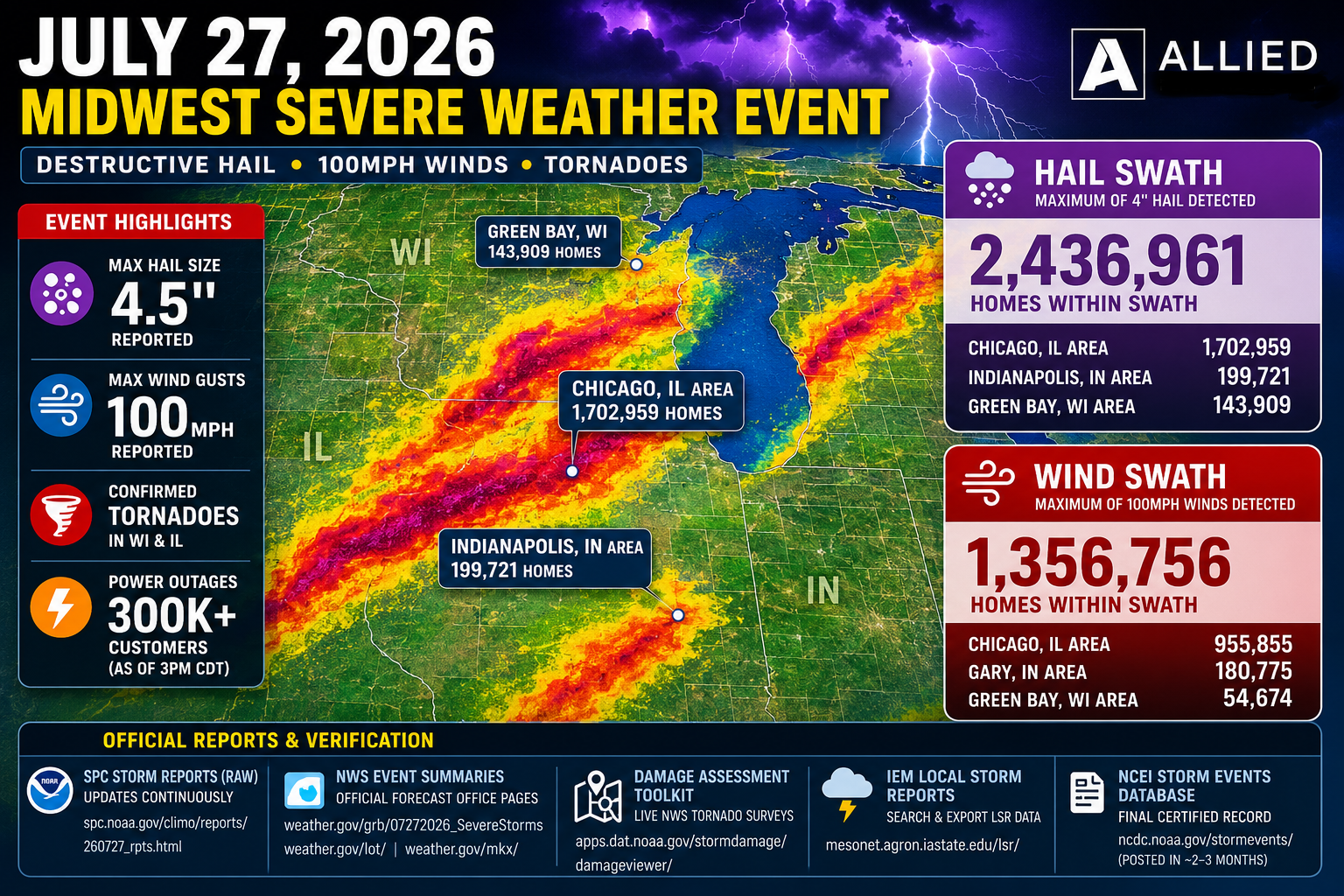
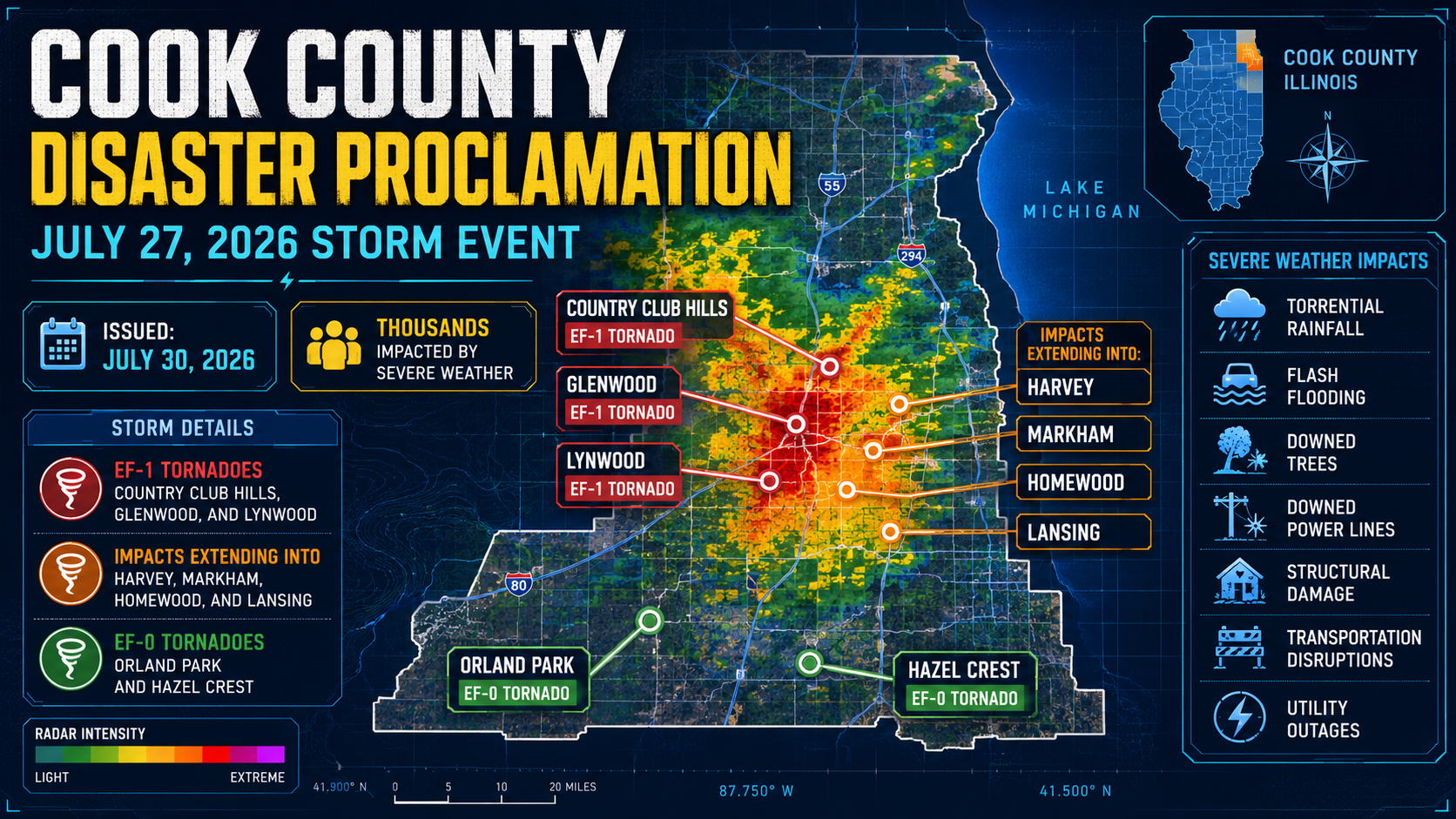
Cook County Board President Toni Preckwinkle issued a Cook County disaster proclamation on July 30, 2026, after severe storms struck the region on July 27. According to Cook County’s official announcement, the storm produced torrential rainfall, localized flash flooding, confirmed tornadoes, structural damage, downed trees and power lines, transportation disruptions, widespread utility outages and impacts to thousands of residents. [1]
The Cook County disaster proclamation allows the County to coordinate recovery operations and pursue available resources for affected communities. It does not, by itself, mean that federal disaster assistance has been approved, that every property qualifies for financial assistance, or that an insurance claim will automatically be covered.
July 27, 2026 Cook County Storm Facts at a Glance
| Question | Officially reported information |
|---|---|
| When did the storm occur? | July 27, 2026 |
| When was the proclamation issued? | July 30, 2026 |
| Who issued it? | Cook County Board President Toni Preckwinkle |
| What hazards occurred? | Severe thunderstorms, torrential rainfall, flash flooding, tornadoes, downed trees and power lines, structural damage, transportation disruptions and utility outages |
| Where were EF-1 tornadoes identified? | Country Club Hills, Glenwood and Lynwood |
| What additional municipalities were affected by the EF-1 tornado activity? | Portions of Harvey, Markham, Homewood and Lansing |
| Where were EF-0 tornadoes identified? | Orland Park and Hazel Crest |
| How broad was the County response? | Cook County EMRS reported working with more than 15 municipalities |
| What equipment was requested or deployed? | Generators, excavators and portable light towers, along with debris-removal and road-clearance support |
| What was the original damage-survey deadline? | August 5, 2026; that original deadline has passed |
What Happened During the July 27 Cook County Storm?
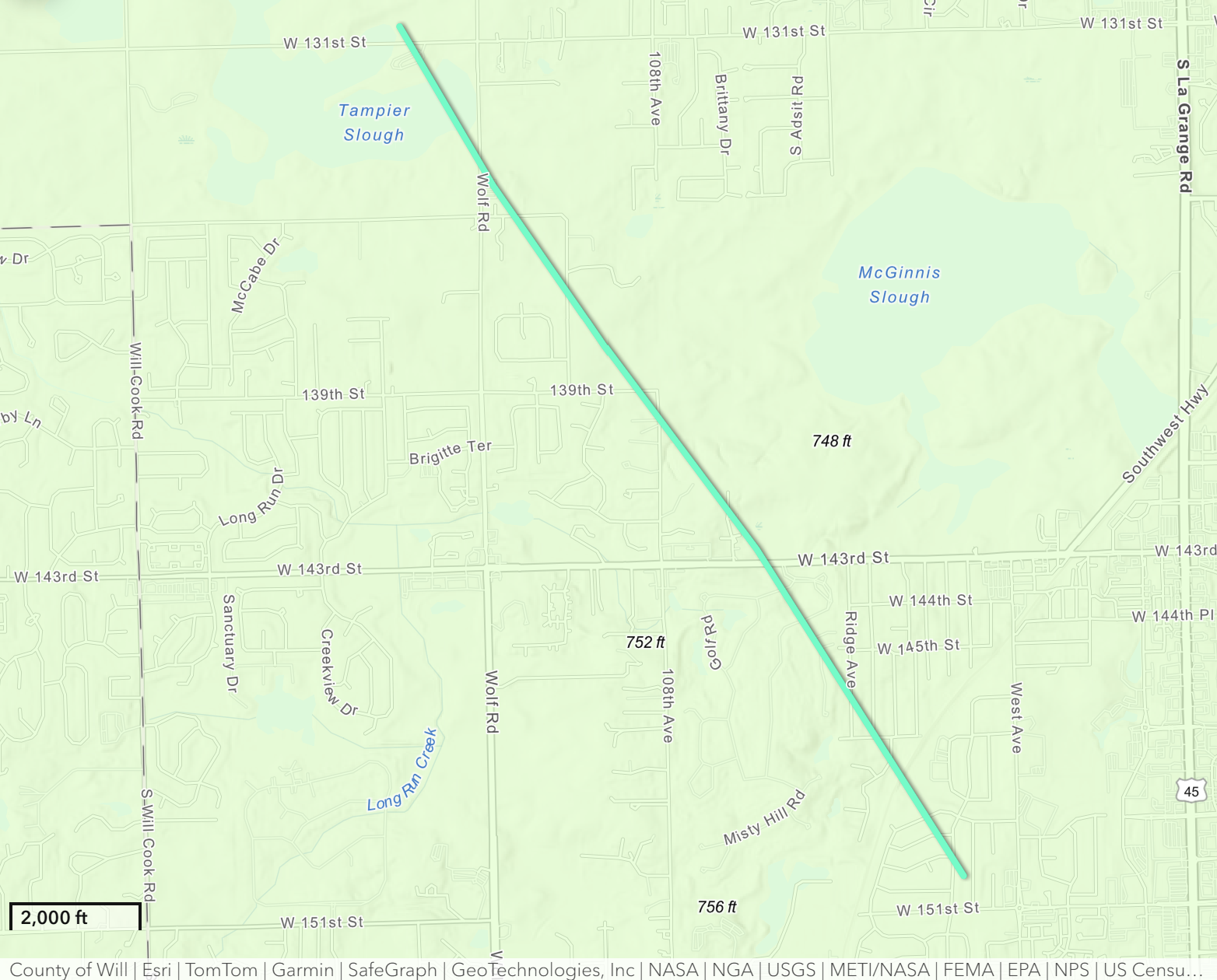
Cook County described the July 27 event as a widespread severe-weather emergency affecting numerous municipalities, particularly in the south suburban area. The County announcement stated that the National Weather Service confirmed EF-1 tornadoes in Country Club Hills, Glenwood and Lynwood. The tornado activity also affected portions of Harvey, Markham, Homewood and Lansing.
EF-0 tornadoes were reported in Orland Park and Hazel Crest. These ratings are based on the Enhanced Fujita Scale, which classifies tornadoes according to estimated wind speeds derived from observed damage.
The storm also caused hazards beyond the confirmed tornado paths. Torrential rainfall produced localized flash flooding, while high winds and falling trees damaged buildings, blocked roads, brought down power lines and contributed to extensive electrical outages.
Even when a property was outside a confirmed tornado track, it may have experienced damage from straight-line wind, wind-driven rain, falling limbs, flying debris, overwhelmed drainage systems or prolonged utility loss.
Which Cook County Communities Were Named in the Proclamation Announcement?
The official July 30 Cook County disaster proclamation announcement named the following communities in connection with confirmed tornado activity or reported impacts:
EF-1 Tornado Locations
- Country Club Hills
- Glenwood
- Lynwood
Communities Also Affected by the EF-1 Tornado Activity
- Harvey
- Markham
- Homewood
- Lansing
EF-0 Tornado Locations
- Orland Park
- Hazel Crest
This list should not be interpreted as a complete boundary of all storm damage. Wind, rain, flooding and utility impacts may have extended into additional communities.
What Does the Cook County Disaster Proclamation Do?
The Cook County disaster proclamation creates an official framework for emergency coordination and recovery. According to the County, the proclamation allows officials to pursue available resources that may help municipalities and residents recover.
Cook County’s Department of Emergency Management and Regional Security, commonly called EMRS, monitored local needs during the storm and continued coordinating with:
- Municipal leaders and emergency-management offices
- First responders and public-works departments
- Cook County Department of Transportation and Highways
- ComEd
- American Red Cross
- Salvation Army
The County reported that EMRS worked with more than 15 municipalities. Assistance included coordinating generators, excavators, portable light towers, debris removal and road clearance.
What the Proclamation Does Not Automatically Do
A Cook County disaster proclamation does not automatically:
- Approve FEMA Individual Assistance
- Guarantee federal or state grant funding
- Establish insurance coverage
- Eliminate policy deductibles or exclusions
- Waive municipal building permits
- Waive contractor licensing requirements
- Determine the value of a property-damage claim
Federal disaster assistance involves a separate assessment and declaration process. Residents should rely on current information from Cook County, the Illinois Emergency Management Agency and Office of Homeland Security, and FEMA rather than assuming that a local proclamation creates federal eligibility. [2]
Is the Cook County Resident Damage Survey Still Available?
Cook County encouraged affected residents to complete its online Resident Damage Survey by August 5, 2026. The survey was intended to help emergency-management officials collect and analyze damage information and determine what resources might be available.
That original deadline has passed.
Residents with unresolved damage should check with Cook County EMRS and their municipal emergency-management office to determine whether:
- The survey deadline was extended
- A replacement survey is available
- Late reports are being accepted
- A local municipality has its own reporting process
- Additional assistance programs were established after the original announcement
A damage survey is generally used for government assessment and planning. Submitting a survey is not the same as filing an insurance claim, requesting a building permit or applying for federal assistance.
What Should Cook County Property Owners Do After Tornado, Wind or Flood Damage?
Properties affected by the July 27, 2026 Cook County storm may still have unresolved roofing, siding, water-intrusion, electrical or structural problems. Delayed damage can become more serious when openings remain exposed or trapped moisture is not identified.
1. Address Immediate Safety Hazards
Do not enter an area with unstable walls, sagging ceilings, exposed wiring, standing water near electrical equipment, a damaged gas line or a leaning tree.
Call 911 for an immediate threat to life or public safety. Report downed electrical lines to the utility company and keep people and animals away from the area.
A building that appears stable from the exterior can still have concealed framing, roof-deck or electrical damage.
2. Photograph and Record the Damage
Create a complete record before debris is discarded or permanent work begins, when it is safe to do so.
Document:
- Every damaged elevation of the building
- Roof, siding, gutter and window damage visible from the ground
- Interior ceiling and wall staining
- Standing water and damaged flooring
- Fallen trees and impact points
- Damaged personal property
- Utility or electrical damage
- Emergency tarps, board-up work and water extraction
- Model numbers and serial numbers for damaged equipment
Keep copies of videos, photographs, contractor reports, weather information, receipts, claim correspondence and municipal notices.
3. Prevent Additional Damage
Insurance policies commonly require policyholders to take reasonable steps to protect the property from additional loss. These measures may include emergency roof covering, board-up work, water extraction or removal of a hazardous tree.
Only perform work that can be completed safely. Preserve photographs and receipts for emergency services. Temporary protection should not be represented as a permanent, code-compliant repair.
4. Notify the Insurance Company
Report the loss promptly and request a claim number. Ask the insurer what documentation is required and whether an adjuster must inspect the property before damaged materials are removed.
Maintain a written claim log containing:
- Claim number
- Date and time of every conversation
- Name and role of each representative
- Requested documents
- Inspection dates
- Payments received
- Coverage questions
- Outstanding disagreements
A contractor can document physical damage and prepare a construction scope. Coverage interpretations and claim decisions remain subject to the insurance policy and applicable law.
5. Separate Wind Damage From Flood Damage
The cause of water intrusion matters.
Water entering through a roof or wall opening created by wind may be evaluated differently from water that rises from the ground, flows over the surface or enters because of flash flooding. Standard homeowners policies generally do not cover flood damage caused by rising surface water. Flood coverage is typically purchased separately. [3]
Because the July 27 storm included both high winds and localized flash flooding, residents should document where the water entered, the apparent sequence of events and any storm-created opening.
What Tornado and Wind Damage Can Remain Hidden?
Not all tornado damage is immediately visible. A complete storm-damage inspection should consider the entire building envelope and structural system.
Potential concealed or easily overlooked conditions include:
- Lifted or creased asphalt shingles
- Broken shingle seals
- Loose flashing around chimneys, walls and roof penetrations
- Displaced ridge caps
- Cracked or detached roof sheathing
- Wet insulation inside attic or wall cavities
- Distorted siding panels or broken siding locks
- Damaged water-resistive barriers behind siding
- Bent gutters and separated downspouts
- Broken window seals or damaged frames
- Racked garage-door openings
- Cracked roof trusses or wall framing
- Shifted masonry or damaged veneer anchors
- Wind-driven rain behind exterior finishes
- Damaged electrical service equipment
- Tree impact damage extending below the visible surface
An inspection should identify the storm-created damage, pre-existing conditions, emergency measures and code-related work needed for a durable repair.
Do Storm Repairs Have to Meet Local Building Codes?
Yes. Permanent storm restoration generally must comply with the codes and local amendments adopted by the municipality where the property is located.
Cook County contains many separate municipalities, and code adoption can differ between Country Club Hills, Glenwood, Lynwood, Harvey, Markham, Homewood, Lansing, Orland Park, Hazel Crest and unincorporated areas. The applicable code edition, permit requirements and inspection process should be confirmed with the authority having jurisdiction before work begins.
A disaster proclamation should not be treated as a blanket waiver of normal construction requirements.
Roofing Code Issues to Verify
A code-compliant roof restoration scope may need to address:
- Condition of the existing roof deck
- Number of existing roof-covering layers
- Removal requirements for wet or deteriorated materials
- Approved underlayment
- Ice-barrier requirements
- Drip edge
- Valley protection
- Step, wall, chimney and penetration flashing
- Manufacturer-required fastening
- Wind-resistance requirements
- Attic ventilation
- Roof-to-wall intersections
- Proper installation around vents, skylights and mechanical equipment
Common International Residential Code topics include weather protection, flashing, roof coverings and reroofing. Exact section numbers and requirements depend on the code edition and local amendments adopted by the municipality. [4]
Siding and Exterior Wall Requirements
Siding replacement is more than attaching a new exterior finish. The restoration scope may need to include:
- Water-resistive barrier
- Window and door flashing
- Kick-out flashing
- Proper fastening and panel movement
- Clearances from roofs, grade and paved surfaces
- Approved transitions between materials
- Repair of damaged sheathing
- Manufacturer installation instructions
Replacing visible siding without correcting a damaged water-management layer can leave the building vulnerable to future leakage.
Window and Door Requirements
Storm-damaged window and door replacement may involve:
- Opening dimensions
- Emergency-egress requirements
- Safety glazing locations
- Structural attachment
- Exterior flashing
- Air sealing
- Water management
- Energy-code performance
- Manufacturer-approved installation
The original product is not always the complete measure of what must be installed during a permitted repair. Current code and local amendments may affect the required scope.
Structural, Electrical and Water-Damage Requirements
Properties struck by trees or tornado debris may require evaluation by a qualified structural professional. Damaged electrical service equipment should be inspected and repaired by properly qualified personnel.
Water restoration should address more than visible surface drying. Wet insulation, wall cavities, subflooring and concealed assemblies may require moisture testing, selective removal, controlled drying and verification before reconstruction.
In a regulated floodplain, substantial storm or flood damage may also trigger local floodplain-management requirements. Property owners should consult the municipal building department or floodplain administrator before rebuilding.
Does Insurance Pay for Building-Code Upgrades?
Code-related coverage depends on the policy.
When a municipality requires additional work to bring damaged construction into compliance, the increased cost may be addressed under ordinance-or-law coverage if that coverage is included and applicable. It should not be assumed that every policy covers every code upgrade.
Examples may include:
- Required tear-off instead of installing another roof layer
- Replacement of deteriorated decking
- Updated ice-barrier installation
- Flashing changes
- Energy-code requirements
- Electrical upgrades
- Floodplain compliance
- Demolition of undamaged portions when required by an enforcement authority
Property owners should request written documentation of the municipal requirement and review the policy with the appropriate insurance professional.
How Much Does Cook County Storm Damage Restoration Cost?
There is no responsible countywide price for damage from the July 27 Cook County storm. A minor roof repair, whole-roof replacement, flooded basement and tornado-damaged structural system are fundamentally different projects.
The Cook County disaster proclamation is not a construction price schedule. Final pricing depends on the property, damage, access, material availability, emergency conditions, permits and code requirements.
| Work category | Major pricing factors |
|---|---|
| Emergency tarping or board-up | Building height, opening size, access, weather conditions, equipment and after-hours service |
| Roof restoration | Roof area, pitch, height, layers, decking, flashing, ventilation, material and tear-off requirements |
| Siding restoration | Material, affected elevations, matching availability, sheathing, water barrier, trim and access |
| Window replacement | Size, frame material, glazing, egress or safety requirements, interior finish and flashing |
| Water mitigation | Water source, affected area, material saturation, contamination category, drying equipment and duration |
| Tree-impact repair | Tree removal, crane access, structural damage, temporary stabilization and utility hazards |
| Structural reconstruction | Engineering, demolition, framing, mechanical systems, permits, inspections and finish restoration |
A credible estimate should identify quantities, unit prices, labor, materials, emergency charges, permit costs and code-required work. It should also distinguish confirmed damage from optional improvements.
Property owners should be cautious about a price given before a meaningful inspection.
How Should Residents Select a Storm Restoration Contractor?
Following a major weather event, residents may encounter high-pressure sales tactics or contractors traveling from outside the region.
Before authorizing work, request:
- The contractor’s complete business name and contact information
- Applicable state or local licensing information
- General liability and workers’ compensation insurance
- A written scope of work
- Product and manufacturer information
- Permit responsibility
- Payment terms
- Change-order procedures
- Estimated schedule
- Written warranty terms
- Procedures for documenting concealed damage
- A clear explanation of emergency versus permanent repairs
Do not sign blank forms. Read the entire agreement and retain a complete copy. Verify professional licenses through the relevant Illinois regulatory authority when a license is required.
A qualified restoration contractor should be able to explain how the proposed work addresses the observed damage, adopted code, manufacturer instructions and municipal inspection requirements.
Frequently Asked Questions About the Cook County Disaster Proclamation
When did Cook County issue the disaster proclamation?
Cook County Board President Toni Preckwinkle issued the Cook County disaster proclamation on July 30, 2026. It responded to the severe storms that affected the region on July 27, 2026.
Why did Cook County issue the proclamation?
Cook County cited tornadoes, torrential rain, flash flooding, downed trees and power lines, structural damage, transportation disruptions and extensive utility outages. The proclamation enables the County to coordinate recovery and pursue available resources.
Where were tornadoes confirmed?
The County announcement identified EF-1 tornadoes in Country Club Hills, Glenwood and Lynwood, with impacts extending into portions of Harvey, Markham, Homewood and Lansing. EF-0 tornadoes were identified in Orland Park and Hazel Crest.
Does the Cook County disaster proclamation mean FEMA assistance is available?
Not automatically. A county proclamation and a federal disaster declaration are separate actions. Residents should verify current assistance status through official Cook County, Illinois and FEMA sources.
Is the August 5 Cook County damage-survey deadline still open?
The original deadline announced by Cook County was August 5, 2026, and that date has passed. Residents should contact Cook County EMRS or their municipality to determine whether late reporting, a new survey or another damage-assessment process is available.
Does a damage-survey submission create an insurance claim?
No. A government damage survey is not a substitute for notifying an insurer. Residents should separately report insured property damage according to their policy’s claim procedures.
Does homeowners insurance cover tornado damage?
Many homeowners policies provide coverage for wind or tornado damage, subject to the specific policy, exclusions, deductibles and cause of loss. Coverage should be confirmed with the insurance company.
Does homeowners insurance cover flash flooding?
Standard homeowners insurance generally excludes flood damage caused by rising surface water. Separate flood insurance may apply. Water entering through a storm-created opening may be analyzed differently, depending on the facts and policy language.
Are permits required for emergency storm repairs?
Emergency stabilization may be permitted under special local procedures, but permanent repair and reconstruction generally remain subject to municipal permits and inspections. Requirements should be confirmed with the local building department.
Why is code documentation important for an insurance restoration project?
Code documentation helps identify work required by the authority having jurisdiction. It can also help separate necessary compliance work from elective upgrades. Whether increased code-compliance costs are insured depends on the policy and applicable ordinance-or-law coverage.
Official and Authoritative Resources
- Cook County Government: Cook County Issues Disaster Proclamation for July 27 Storm Event
- Federal Emergency Management Agency: How a Disaster Gets Declared
- National Flood Insurance Program: FloodSmart.gov
- International Code Council: ICC Digital Codes
- Illinois Department of Insurance: Consumer Insurance Information
- Illinois Department of Financial and Professional Regulation: Professional License Lookup
Cook County Tornado and Storm Damage Restoration Assistance
Allied Emergency Services, INC. provides emergency stabilization, storm damage assessment and restoration support for properties affected by wind, tornadoes, rain, water intrusion and related building damage.
A restoration plan should address the complete building system—not only the most visible damage. The appropriate scope may include temporary protection, moisture assessment, roof and exterior-envelope evaluation, structural review, code research, permit coordination and detailed construction documentation.
For immediate service or consultation, you may contact us at Allied Emergency Services, INC.
Contact Information:
Phone: 1-800-792-0212
Email: Info@AlliedEmergencyServices.com
Location: Serving Illinois, Wisconsin, and Indiana with a focus on the greater Chicago area.
If you require immediate assistance or have specific questions, our human support is readily available to help you.
Disclaimer: This article is intended for informational purposes only. For professional advice, consult experts in the field.
⚡ Storm or Roof Damage? Get a FREE Estimate
Text ESTIMATE to (844) 907-2546
Or call (800) 792-0212 for 24/7 emergency response
AI-powered • No obligation • Licensed IL & WI
Need storm damage help?
Allied Emergency Services — Licensed IL & WI Storm Damage Specialists
For more than a decade, Allied has been restoring storm damage across Illinois and Wisconsin. IICRC-certified, EPA Lead-Safe, IL Licensed Roofing Contractor #104.019029. 24/7 emergency response.
Learn about our Storm Damage service →Free property assessment within 24 hours · No obligation · Photo-documented findings you can share with your insurer
Attorneys: forensic storm damage documentation & construction expert consultation for counsel →